




Our People to Live Stronger & Longer

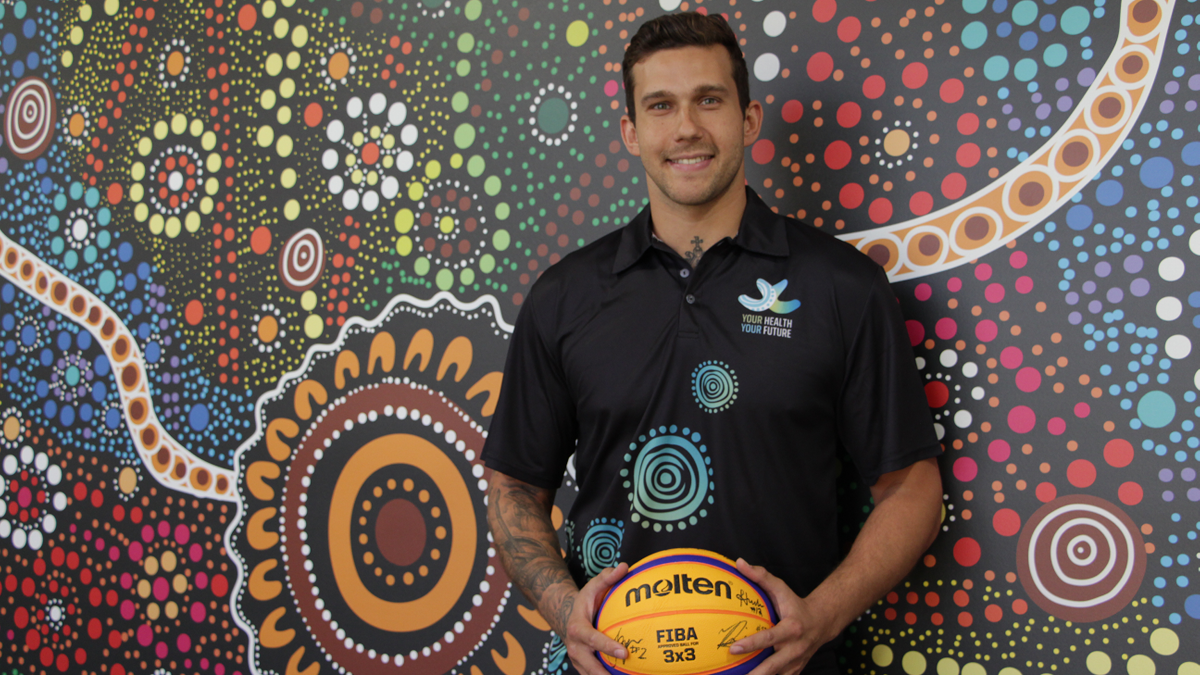
AH&MRC and CAHS launch joint Basketball Sponsorship with Basketball legend, Tyson Demos

Coonamble Aboriginal Health Service (CAHS) and AH&MRC have launched a  joint sponsorship venture with former Illawarra Hawks NBL player, Tyson Demos. Tyson has achieved so much in his basketball career so far, including his work with the Indigenous Community Basketball League (ICBL) and his involvement in the Health Deadly Kids project run by Illawarra AMS.

CAHS and AH&MRC’s partnership will see both organisations supporting Tyson Demos and a group of NBL All-stars to compete in Gilgandra Windmill Basketball Carnival located in Gilgandra in Central West NSW. The team will head six hours west of Wollongong, on a 500 kilometers trip, to compete in the Carnival. The team will also participate in community activities, including a youth basketball camp, to raise awareness of important health issues affecting Aboriginal communities.

The Gilgandra Windmill Basketball Carnival has been around for 44 years; Teams travel from as far as Sydney, Newcastle, Lightning Ridge, Bourke, Dubbo, to participate. The competition also attracts local teams, who register in divisions A, B or C, and verse teams from all across the state.  The Carnival, hosted by the Gilgandra Basketball Association, is so successful because it attracts teams with different skills and abilities, as well as men’s and women’s divisions. Players don’t just compete for the winning title and prize money, they’re mostly there to have fun and connect with people. The Carnival attracts players from all walks of life and in recent times, NRL stars such as Blake Ferguson, Solomon Haumono, Brent Naden, Choc Mundine, and David Peachey have taken the floor, along with many former NBL stars. The Carnival will run across three days with Tyson and his team scheduled to play some fierce competitive basketball and represent AH&MRC and CAHS as sponsors.

“The Carnival is so successful because of its grassroots origins. It’s not commercial and it’s run locally, for people to have fun, stay fit and meet new people. I think it’s an incredible initiative” – Phil Naden, CAHS CEO. Phil continued ‘ I’m excited to have AH&MRC onboard to sponsor the team and to raise the profile of this incredible initiative at a state and community level. We hope to get the word out and spread it far and wide across the bush’

While the Carnival is not Aboriginal and Torres Strait Islander (ATSI) focused, there will be is strong ATSI representation over the weekend. From an estimated 45-50 teams, and roughly 500 players in total, 50% identify as ATSI.Tyson Demos has ties with the International basketball legend Patty Mills who initiated the Indigenous Business Australia, a professional body with links to the Indigenous Country Basketball League (ICBL).  ICBL basketball is taking off in rural and remote communities and is creating fertile ground to nurture the basketball skills and talents of our next generations of Aboriginal and Torres Strait Islander youth.

With Tyson as an ambassador for the joint venture, CAHS and AH&MRC are confident that the weekend will help to inspire our Communities, especially young people, to get involved, play their A-game, and have fun. Both organisations look forward to meeting the teams and getting involved over the three days.

Author – Coonamble Aboriginal Health Service

For more information contact the AH&MRC Communications Team at  comms@ahmrc.org.au 
NSW State Budget: A Step in Right Direction However Partnership and Shared Decision Making Is Vital to Ensure Funding Makes a Difference to Aboriginal Communities

On 22 June 2021, the New South Wales Treasurer, Dominic Perrottet, delivered the 2021-22 State Budget. Under a commitment to enhance Aboriginal communities, the government has earmarked $995 million for Indigenous specific programs and services, including $43.7 million to support Aboriginal Community Controlled Health Organisations (ACCHOs), especially in Regional NSW. This is a major advancement for the sector, and much needed.

As the peak body for Aboriginal Health in NSW, the Aboriginal Health and Medical Research Council of NSW (AH&MRC) urges the Berejikilian Government to work alongside the Aboriginal Community Controlled Health Sector to determine how the $43.7 million will be spent.

AH&MRC commends the NSW Government for its commitment to Aboriginal and Torres Strait Islander communities and in particular, the community-controlled health sector. This announcement is a step in the right direction; however, the government will need to work with ACCHOs to ensure that funds are allocated where they are most needed and support initiatives put forward by the sector. As the people on the ground, only the ACCHOs understand the direct needs of their communities.

AH&MRC would particularly like to see this money invested in the regional networks of the ACCHO sector to support the development of sustainable integrated models of care.

Under the National Agreement on Closing the Gap, the NSW Government has pledged to work in full and genuine partnership with Aboriginal and Torres Strait Islander Peoples on all policies and programs that impact their communities. It will be imperative that this, and all Aboriginal specific commitments outlined in the 2021-22 budget are delivered with Aboriginal and Torres Strait Islander people are the centre of decision making.

For all media enquiries, please contact AH&MRC’s Communications and Marketing Team at comms@ahmrc.org.au

Media Release: First NSW Implementation Plan for Closing the Gap

The Aboriginal Health and Medical Research Council (AH&MRC) is pleased to announce that the Aboriginal Affairs Minister, Don Harwin, has tabled the first New South Wales (NSW) Implementation Plan on Closing the Gap.

The Plan sets out the first-year roadmap for implementing the new National Agreement on Closing the Gap in NSW, which came into effect in July 2020.

The plan outlines five agreed priority reforms:

  1. Formal partnerships and shared decision making;
  2. Building the community-controlled sector;
  3. Transforming government organisations;
  4. Shared access to data and information at a regional level; and
  5. Employment, business growth and economic prosperity.

Also detailed in the Plan are the actions that will be taken to achieve progress against seventeen socio-economic targets in areas including: education, justice, health and wellbeing, employment, land and waters, safety, in addition to housing and languages.

“AH&MRC has worked closely with the Government, through the NSW Coalition of Aboriginal Peak Organisations (NSW CAPO), in the development of this plan. We have ensured that the voices of our Members are reflected and will continue to advocate on their behalf as the reforms progress” – AH&MRC CEO Robert Skeen.

The Plan acknowledges the vital role that the Aboriginal Community-Controlled Sector plays in delivering high-quality services to meet the needs of Aboriginal and Torres Strait Islander communities across the country. One set target is to increase Government funding for programs and services delivered by Aboriginal Community-Controlled Organisations (ACCOs).

Some of the highlights for AH&MRC Members include an $8.7 million grants program to support ACCOs and Aboriginal businesses and a $7.4 million contribution to the national funding pool for ACCO sector development in the final print.

The Plan is a positive step forward for Closing the Gap. It provides a foundation to improve health outcomes for Aboriginal and Torres Strait Islander peoples and will transform how the Government works with Aboriginal communities.

The Implementation Plan will be submitted to the National Joint Council on Closing the Gap. Following this, the Government, alongside NSW CAPO will consult and gather feedback from Aboriginal and Torres Strait Islander communities throughout NSW to inform the implementation of the Plan.

The full Implementation Plan can be found here.

For media enquiries, please contact comms@ahmrc.org.au or call (02) 9212 4777.

The Triumph of Telehealth

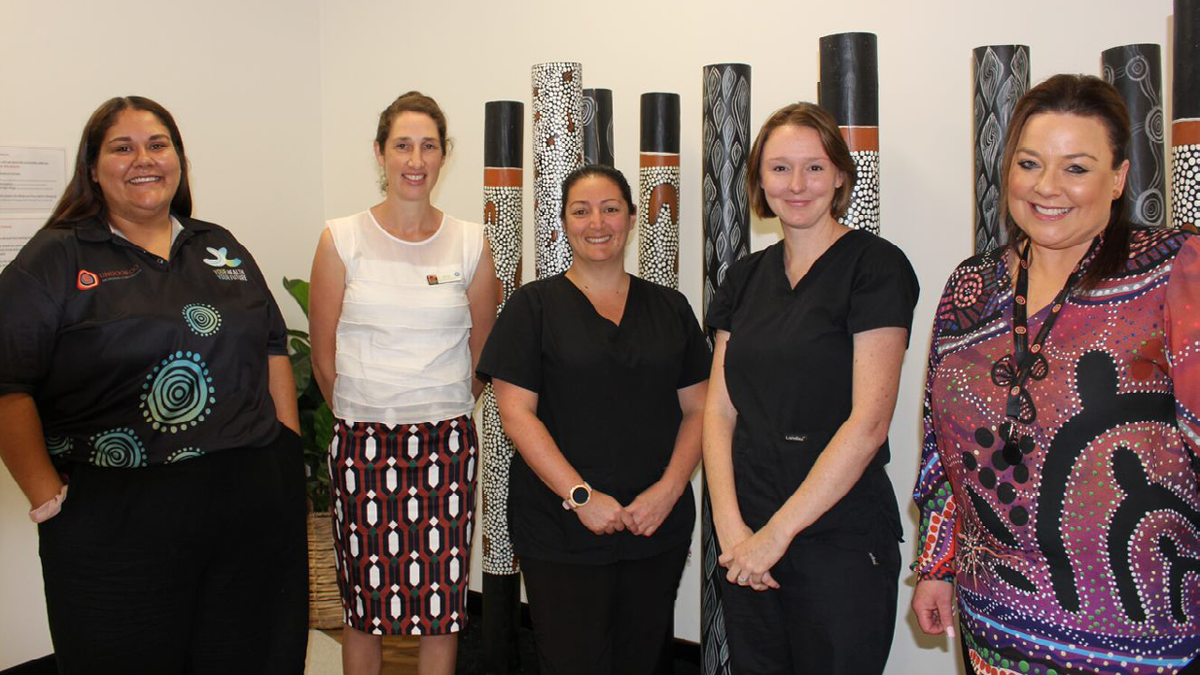
Photo caption: (L-R): Mariah Hall – Aboriginal Health Practitioner, Dr Liz Milla – GP, Hayley Waugh – RN, Brooke Turner – RN CLINICAL COORDINATOR and Taasha Layer – CEO 


Having swept through the health sector on the back of emergency Federal Government pandemic funding, Telehealth and its sudden prominence will likely have positive health ramifications for many years to come, particularly in regional and remote areas.

According to government figures, 54 million Telehealth services (defined as a health consultation via phone or video) was completed in Australia between March 2020 and March 2021, and 281 new temporary MBS item numbers were added to the schedule (meaning those services could be billed to Medicare). This represents an extraordinary rise from approximately 20,000 to around 4.5 million Telehealth appointments per month.

Ungooroo Aboriginal Corporation is one organisation that quickly jumped on the Telehealth express. Ungooroo runs a regional health service located in Singleton, NSW and because of their remote location, they had already partially adopted Telehealth for some specialist services (such as psychiatry) that didn’t have a physical presence in the area. Brooke Turner is Ungooroo’s Clinical Coordinator and says that while the practice found Telehealth valuable right from the beginning, it really came into its own with the arrival of the pandemic.

“Myriad benefits soon became apparent. In addition to an increase in usage for specialist services, Ungooroo started using Telehealth for general appointments, giving test results and follow-ups, and we will soon start to use it for medications too with the rollout of e-script,” she says.

“Its flexibility has been one of its greatest features. For example, if someone has an appointment but can’t make it to the clinic, we can offer a phone consult instead and still bill Medicare. It fills that gap and definitely reduces the problem of, ‘Fail to Attend’ in appointments. The doctors also love it because they can do follow-up appointments much more efficiently.”

Brooke says the Ungooroo team was able to adjust quickly to the new way of working although, because of the urgency, it was a bit of a scramble to set the technology up, write new procedures and adjust to the new way of working.

“We were concerned we might miss a key symptom, particularly when Covid was really bad and we were doing upwards of 70% of appointments via Telehealth, but we always reserved several in-person consultations at the end of the day, just in case there was a patient who really needed to be seen.”

According to Brooke, Telehealth has definitely helped patients access appointments with specialists and other allied health professionals. “We’re only an hour from Newcastle, but there are no specialty services near us and next to no public transport. For many patients, Telehealth has been fantastic, they love the convenience of it,” she explains.

“I hope Telehealth continues to expand with more specialist services coming on board. We have a two-year waitlist for children to see a pediatrician, for example, but I feel that Telehealth could significantly reduce this.”

Today, Brooke says that while Ungooroo remains an important community hub for the local Aboriginal community, where coming together for a face-to-face yarn will always be important, Telehealth is here to stay and the ideal balance would be 30% Telehealth, 70% in person.

“Things were tending in the Telehealth direction anyway, but the urgency of Covid allowed us to finally get the funding we needed. It’s knocked years off the transition and there is no going back. It’s significantly helping us improve the health outcomes for patients.”

For any Aboriginal health services considering increasing their Telehealth offering, Brooke says it is definitely worth it, but she would recommend bringing a consultant in initially to help set the system up and train the staff.

“We’re a small, relatively young and computer-savvy team, so we just went straight for it. But working with technology can be confusing and frustrating. To succeed, it must be carefully thought through so you don’t lose people before you’ve even got started,” she says.


For more information regarding telehealth, and how it can be used in your service, contact Aashima Bhatnagar on abhatnagar@ahmrc.org.au  or call (02) 9212 4777.

AH&MRC Launch 2021 NSW Aboriginal Youth Symposium

The Aboriginal Health and Medical Research Council (AH&MRC) of NSW is extremely proud to launch the 2021 NSW Aboriginal Youth Symposium – an exciting two-day event for young people (aged 18-29) to network, share knowledge and shape their future.

Set for June 23-24, the 2021 NSW Aboriginal Youth Symposium will see young people from around NSW gather in a culturally safe space at Doltone House, Pyrmont and listen to inspiring keynote speakers, participate in focus groups and yarn about key issues and challenges that they experience. A celebratory dinner will also be held for all attendees with special performances by renowned Aboriginal artists Barkaa, who’s song ‘Our Lives Matter’ has been heralded by GQ as the ‘unofficial soundtrack to Australia’s Black Lives Matter movement, and Gamilaroi artist Kobie Dee.

Youths attending will also have the opportunity to collaborate on a piece of artwork alongside talented artist Shane Kooka, with the final design used for AH&MRC’s youth initiatives in the future.

The Youth Symposium has been co-designed in partnership with the Aboriginal Youth Advisory Committee. Community control is key to the event, with AH&MRC aiming to ensure that young people are given the opportunity for their voices to inform future Aboriginal health programs and initiatives.

“The NSW Aboriginal Youth Symposium has been designed by Aboriginal young people, for Aboriginal young people. AH&MRC’s goal is for Aboriginal young people to achieve self-determination – to be in control of their own health and wellbeing. We need to listen to Aboriginal young people, understand their barriers to accessing healthcare and work out a way forward. We are thrilled to be hosting what we hope, are our future leaders, and give them a platform for their voices to be heard,” stated Shana Quayle, AH&MRC’s Sector Support and Public Health Intelligence Unit Manager.

The event’s itinerary is jam-packed with activities and focus groups to encourage young people to get involved. This will provide a platform to discuss health topics and issues that are important to Aboriginal youth – with a focus on Closing the Gap initiatives.

The 2021 NSW Aboriginal Youth Symposium will be a place of unity, connecting Aboriginal youth from different backgrounds and parts of NSW.

Interested in attending the event?

AH&MRC is covering the cost of attending the event, accommodation, travel (if required), as well as the celebratory dinner for attendees. Register now as places are filling up fast.

The AH&MRC would like to thank the Mental Health Commission for their contributions to the event, and the Aboriginal Youth Advisory Committee for their consultation and guidance in organising the event.

For more information about the Aboriginal Youth Symposium contact Kezia Blackledge & Shana Quayle via email at AYS@ahrmc.org.au or phone (02) 9212 4777.

For all media enquiries, please contact AH&MRC Communications Team on (02) 9212 4777 or via email at comms@ahmrc.org.au.

About Us:

The AH&MRC is the peak body for Aboriginal health in NSW. Our membership is comprised of 47 Members—Aboriginal Community Controlled Health Organisations in NSW.

AH&MRC Launch ‘Yarn-Up about the COVID-19 Vaccine’ Campaign

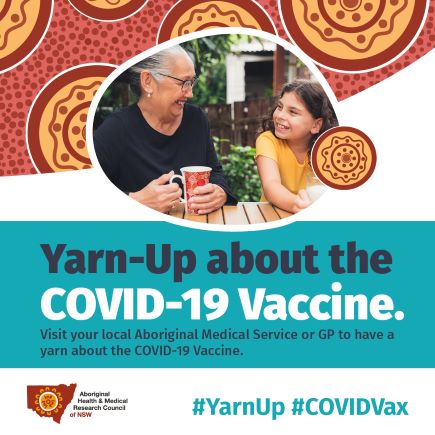
The Aboriginal Health and Medical Research Council (AH&MRC) of NSW have launched ‘Yarn-Up about the COVID-19 Vaccine’; a brand new campaign aimed at encouraging Aboriginal Communities to seek information about the COVID-19 Vaccine.

The campaign will focus on urging Aboriginal Communities to visit their local Aboriginal Medical Service (AMS) or GP to have a yarn about the COVID-19 Vaccine and seek more information based on their individual needs.

AH&MRC CEO, Robert Skeen, stated: “There is substantial, and sometimes, contradictory information about the COVID-19 Vaccine broadcast in the media each and every day and it can be confusing to know which information to believe. AH&MRC are encouraging Community to head

into their local AMS or talk to a trusted medical professional – such as a GP or Aboriginal Healthcare worker – to ensure that they are receiving correct information about the Vaccine which is relevant to their individual situation, health and circumstances.”

The ‘Yarn-Up about the COVID-19 Vaccine’ campaign will incorporate a comprehensive marketing strategy which will be rolled out across NSW to ensure effective and efficient communication across Community. AH&MRC engaged  33 Creative to design the campaign branding across posters, social media tiles and email banners. The campaign branding was based off Yulul-gi Munan; an artwork commissioned by AH&MRC from Aboriginal artist Madison Connors.

The marketing campaign will extend to AH&MRC’s Member Services across NSW with AMS staff wearing #YarnUp #COVIDVax t-shirts, ‘Yarn-Up’ posters advertised in clinics and a new 30 second video rolled out in GP and AMS waiting rooms across the Tonic Health network.

For more information on the Yarn-Up About the COVID-19 Vaccine campaign or for any media enquiries please email comms@ahmrc.org.au or call (02) 9212 4777.

Lack of Funding Prevents Waminda from Closing The Gap

For the past three years, Waminda South Coast Women’s Health and Welfare Aboriginal Corporation has been lobbying for funding to build a Birthing and Community Centre which will allow a culturally safe space for Aboriginal women to birth on country.

Birthing on Country enables women to have access to a midwifery continuity of care model which gives women access to a known provider for their maternity services – reducing preterm births, ensuring cultural safety, increasing birth weights and reducing interventions. A Birthing and Community Centre attached to Waminda would provide Aboriginal women a regionally based, culturally safe, high-quality maternal health service. Currently, Waminda provides antenatal and postnatal care to women birthing Aboriginal babies in the Illawarra Shoalhaven area. This service enables women to have a choice in where they give birth and increases engagement with all forms of maternal care. Without a birthing facility, Waminda is unable to provide the whole spectrum of care and women are forced to give birth in unsafe and unknown environments.

Waminda has been operating for the past thirty-seven years on the NSW South Coast and is an Aboriginal Community Controlled Health Service which provides women and their Aboriginal families culturally safe and holistic care as well as an opportunity to belong and receive quality health and well-being support.

Waminda aims to take the Birthing on Country (BoC) concept from aspirational to actual in the next 12 months. By incorporating a ‘Birthing on Country’ program, the Birthing and Community Centre will create a landmark initiative in cultural recognition that has the potential to profoundly and positively affect maternal, infant and child health. Birthing on Country is the foundation of birthing practices for maternity services and focuses on traditional cultural customs of knowing, being and doing. Without funding, this program will not come into fruition.

Faye Worner, CEO of Waminda, stated: “We have so much interest in our birthing program. Aboriginal women are calling from all across the country, willing to relocate to be able to access our Birthing on Country program and we have to turn them away due to lack of funding.”

Despite receiving numerous letters of support including from the NSW Minister for Health, The Hon. Brad Hazzard, MP, and the Chief Executive of the Illawarra Shoalhaven Local Health District, Margot Mains, no commitment of funds has been made.

Under the National Agreement on Closing the Gap, the Government has committed to work in true partnership with the Aboriginal Community Controlled Health Organisation sector. A key focus of Closing the Gap Target 2 aims to achieve 91% of Aboriginal babies born with a healthy birthweight. Under Waminda’s current model, 50 out of 52 babies birthed in 2020 were born at a healthy birth weight with approximately 80% of women attending antenatal appointments in early pregnancy. Funding the Waminda birthing centre is the first step in achieving the healthy birthweight target and supporting healthy Aboriginal babies in NSW.

AH&MRC’s CEO, Robert Skeen, stated: “Today is a timely reminder of how long and how hard we have been working to Close the Gap and yet how far we still have to go. Government funding for the construction of the Waminda Birthing and Community Centre is the first step in achieving the healthy birthweight target and supporting healthy Aboriginal babies in NSW.  We need the government to truly invest in a healthy start to life for both mothers and babies.”

 For more information or any media enquiries, please email comms@ahmrc.org.au or call (02) 9212 4777.

Photo Credit: Ruth Armstrong, Croakey

Sydney Kings and Flames launch Healthy Deadly Kids Program in partnership with AH&MRC

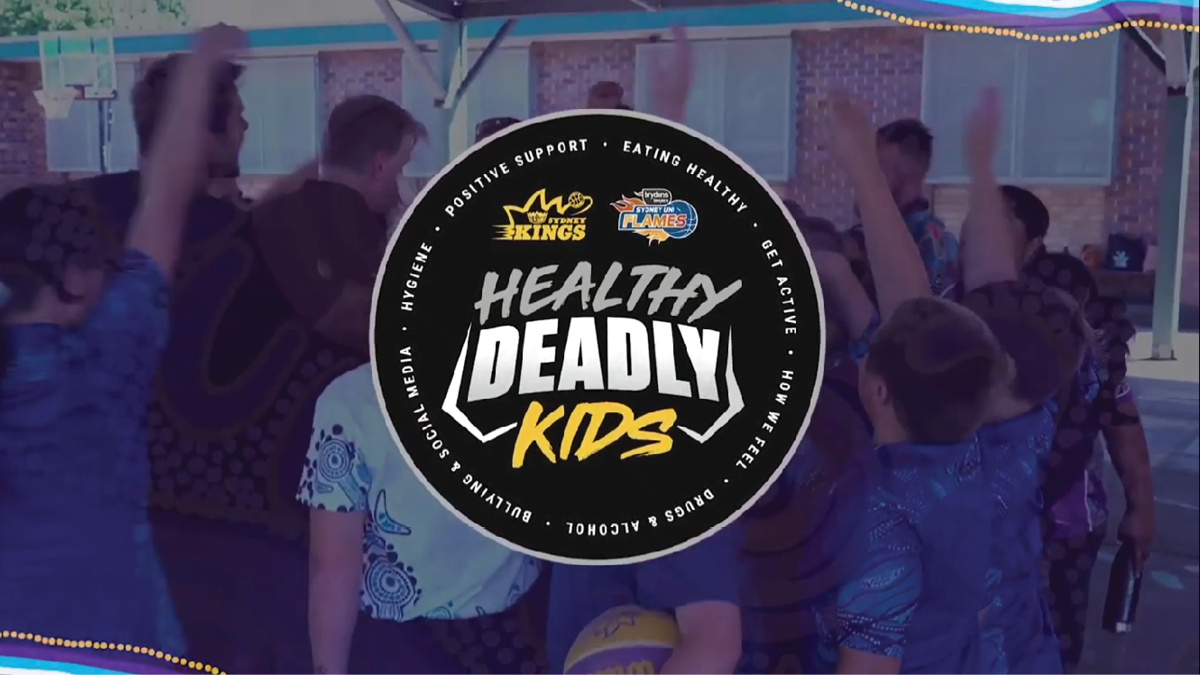
The Brydens Lawyers Sydney Kings and Brydens Sydney Uni Flames, in partnership with the Aboriginal Health and Medical Research Council of NSW (AH&MRC) have officially launched the Clubs’ first Indigenous community program, Healthy Deadly Kids (HDK).

HDK is unique in Australian sport, developed and run by Indigenous Australians.  The program is a healthy living education initiative aimed at primary school aged children from Early Stage 1 – Stage 3 that focuses on teaching a holistic view of health and wellbeing.

There are seven key learning areas that involve both theoretical components and physical activities which have been developed by health service professionals in the Aboriginal Community Controlled Health services sector in conjunction with the Kings and Flames. The learning topics covered over a school term allow facilitators to explore students’ knowledge and understanding of what it means to be a ‘healthy, deadly kid’.

The program is currently delivered in primary school classrooms, with the goal to bring it online and make it available to all Australian kids.

Brydens Lawyers Sydney Kings CEO Chris Pongrass, said: “We recognised early on that we needed to take small, meaningful steps in order to create a difference in the Indigenous community. In partnership with AH&MRC and following the introduction of our Reconciliation Action Plan (RAP), we are thrilled to launch our Indigenous community program HDK”.

“Basketball is among the most popular sports for Indigenous Australians – the Kings and Flames can use basketball as a platform to help foster positive change, educate the youth on healthy eating habits and lifestyle choices, and encourage participation and elite development in young Indigenous athletes through programs like Healthy Deadly Kids” said Pongrass.

CEO of AH&MRC Robert Skeen said: “We’re very excited to launch this partnership with the Kings and the Flames. These athletes will inspire our kids and encourage them to enjoy a healthy lifestyle and physical activity every day.

“HDK is about educating the younger generation to make intergenerational changes around healthy eating and lifestyle, so to have these athletes come in and act as role models and mentors, and help with conveying the message is really important”.

To lead the delivery of the Healthy Deadly Kids community program, the Kings have employed Joel Cama, a young Indigenous man and also retained the services of Matt Flinn, former Illawarra Hawks Head Coach who is passionate in his support of Indigenous community work and has a large portfolio initiating community programs from his career in the NBL.

Former NBL-star and Indigenous athlete Tyson Demos has also joined the Club as a program facilitator. Demos – in conjunction with Illawarra Aboriginal Medical Service educator Nikita Tompkins who will manage the in-classroom learning – will be responsible for managing the post-classroom component alongside Kings and Flames players and coaches, on the basketball court.

“The thing I love about the Healthy Deadly Kids program is that we run these sessions on a weekly basis, which allows us to build up a rapport and trust with the kids” Demos said.

“The eight-week program engages primary school kids throughout Sydney and NSW in a positive and safe environment, and it allows us to equip them with invaluable tools, skills and experience to flourish and live a healthy lifestyle, while promoting the benefits of physical activity through basketball” said Demos.

The roll out of the program which tipped off last month at Warilla North Public School includes several schools throughout the Illawarra and Greater Sydney regions. Briar Road Public School and Reiby Juvenile Detention Centre are also part of the Term 1 roll out. The program will run for the entirety of 2021 with additional schools to be included in Term 2 and beyond.

Kane Ellis, CEO of the Illawarra Aboriginal Medical Service, played an integral part in creating  the program three years ago and spoke about how it differs from other health programs for kids in the community.

“The difference between HDK and other programs is that it is delivered by Indigenous people to both Indigenous and non-Indigenous kids. We think this is one of the most important aspects of the program, the delivery of it” Ellis said.

“We flipped the switch on the way these programs are typically rolled out by delivering an Aboriginal program to all kids, not the other way round. Most of the ambassadors and educators who are teaching the program understand the struggles and the barriers which these kids often come up against”.

“The outcome is to have a few of these kids who walk away from the program better educated, an elite person, and to thrive in the environment that they’re in, and hopefully give back to the community what they’ve learnt through the HDK program” said Ellis.

As was announced late last year, the Club has appointed an Indigenous Advisory Committee who will help guide key decisions and oversee the delivery of the organisations RAP goals which includes the Healthy Deadly Kids program. Indigenous leaders, Kane Ellis, Bruce Shillingsworth, Jamie Soward and Cain Slater are joined on the committee by Paul Smith, former Kings captain and TSE staff member, Kevin Lisch and Flames Head Coach, Katrina Hibbert.

Watch the Healthy Deadly Kids Program video to learn more about the program.

For more information about the partnership, contact comms@ahmrc.org.au

Events at AH&MRC up and running with a few COVID-19 safe measures

Events are still running at AH&MRC, but with a few changes. Our Venue Hire and Events Coordinator, Danni Li, has adapted venue hire at AH&MRC to ensure that all events are COVID-19 safe. Danni’s role is to ensure that events run smoothly at AH&MRC, from the initial booking to hosting the event. Danni does an excellent job at servicing venue hire clients and making sure their event is everything they imagined. We got Danni to answer a few questions about events at AH&MRC:

How have events at AH&MRC changed considering COVID-19?

Events at AH&MRC are running as usual with a few measures in place to ensure all our visitors and staff are in a COVID-safe environment. These measures include a form for guests to fill out with details of recent travels and COVID-19 symptoms as well as a digital check in, which is mandatory for all events in NSW.

To ensure a safe environment for our guests, we have hand sanitizer, disinfectant wipes, masks, and gloves for guests o use. Upon guest’s arrival, we run them through some general housekeeping rules and provide them stickers to wear to ensure they are identifiable to AH&MRC staff.

Our catering services have changed to prevent the second touch of food and beverages. We now only provide individual packages for food, single-use cutlery and singular tea and coffee bags to our guests.

What is your most memorable event in your time working at AH&MRC?

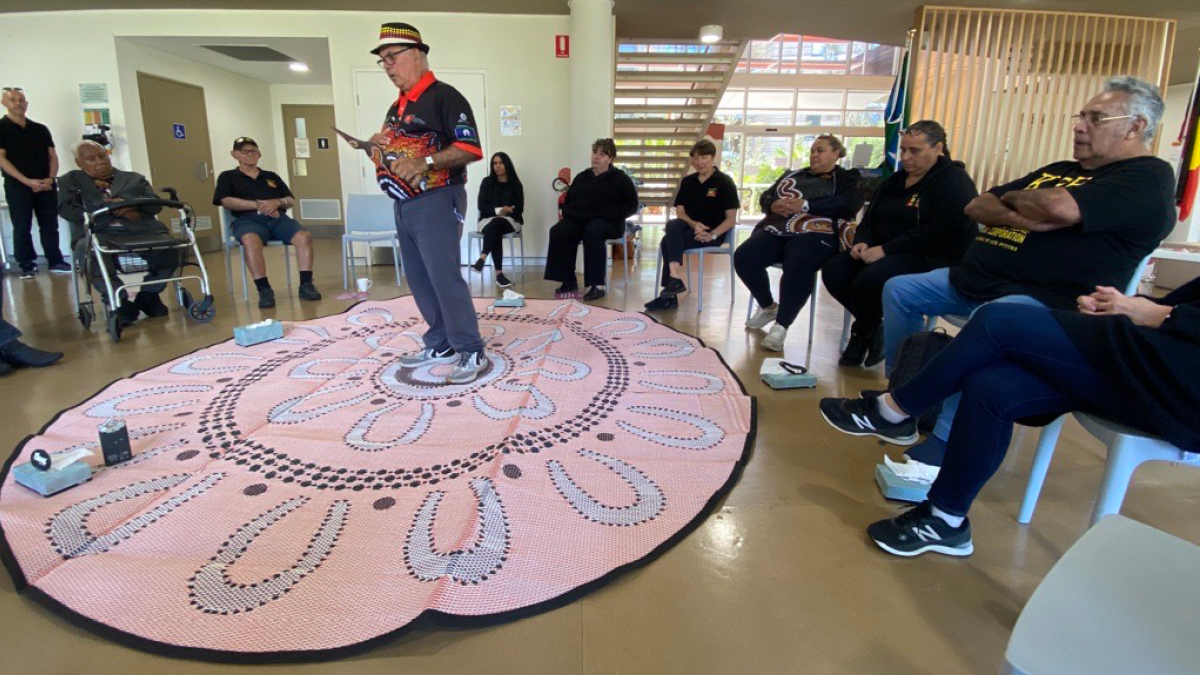
My most memorable event while working here at AHMRC would have to be the Kinchela Boys Home event at NAIDOC week last year. Elders from Kinchela Boys Home came into our Little Bay Campus to talk to our staff about their personal experiences and the Stolen Generations.

The Kinchela Boys Home event is a perfect example of how AH&MRC’s venue is such an intimate and culturally respectful place. This was highlighted throughout the day with regular yarning sessions that gave everyone an opportunity for their voice to be heard. See a small clip from the day here.

Why should people hire a venue at Little Bay?

There are many reasons why someone might want to hire a room want to hire a room at the AH&MRC. These include corporate functions, workshops, notable speakers, or cultural days.

Some examples of organisations that have hired our venue are Cancer Institute of NSW, the Ministry of Health, TAFE, and La Perouse Council. I think the AH&MRC venue is an appealing option for clients because of its cultural value, as well as it being a large, open venue with natural sunlight and ocean views.

The AH&MRC venue is a culturally appropriate venue for team building. We have connections to cultural tours and activities in the area and can help to organise these for our guests. Guided bushwalks and tours of the La Perouse area can help to promote an understanding of Aboriginal culture and history.

The AH&MRC is a non for profit organisation so any income created from venue hire will go into helping deliver programs for our sector and assist in AH&MRC in achieving sustainability.

What does a typical workday look like for you?

A typical workday for me involves touching base with clients and planning their events. I am constantly updating floor plans and contracts to make sure our venue is tailored to client’s needs. My main goal is to bring to life my client’s events in the way they imagine. AH&MRC is a place of working together in unity, and it is my hope that every guest leaves AH&MRC feeling connected to culture and having had a positive experience.

When you are not organising events, what do you like to do in your free time?

Aside from my passion for organising events, I love photography and spending time with animals, especially rescue dogs. I also love road trips and travelling as it gives me the opportunity to wind down, appreciate the beautiful land we live on and capture these moments as photographs.


If you are interested in booking an event at the AH&MRC email Danni Li at dli@ahmrc.org.au or call (02) 9212 4777

Keeping spirit strong through a holistic approach at Waminda

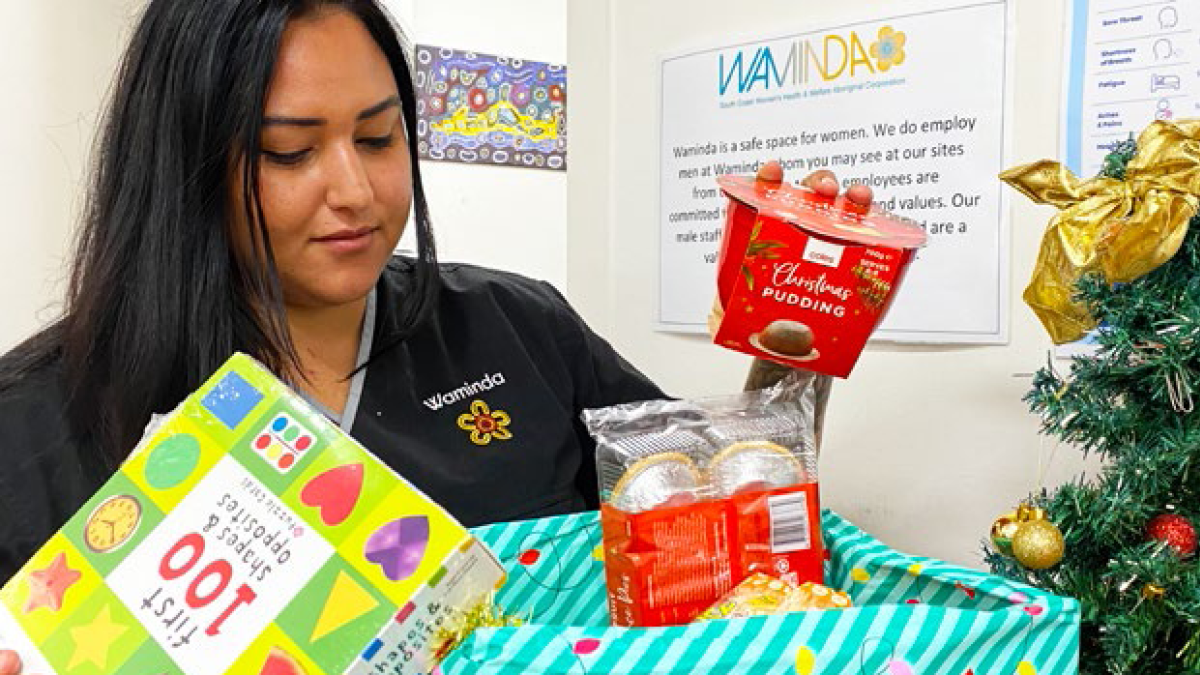
Imagine receiving a care package from your local health provider with food, sanitiser and art and craft materials for your children. Your Elders getting their medical supplies and toiletries. And everyone being reminded to keep active and nurture their body through eating healthy food. That was Waminda’s response to lockdown earlier this year in order to ensure the safety of their mob.

Waminda, an Aboriginal Community Controlled Health Service for women’s health and welfare, has a strong cultural governance and is guided by the community in which it operates. Their programs are rooted in connection to country and culture, with a particular focus on healing and keeping spirit strong.

The Baalang Healing program is a key program for Waminda. It was developed in response to the social and emotional wellbeing, spiritual, cultural and physical health needs of our community. “It has been designed and led by Aboriginal women under the guidance of Elders. Their voices are powerful in the design of our healing processes. There is a commitment to pass on cultural knowledge, identity and healing,” said Kristine Falzon.

Self-determination is a key focus of this program. Participants are encouraged to recognise and value themselves as their own healers. Throughout the healing program, the team at Waminda also created resources for the community specific to their needs. This includes free hotlines and additional support to increase accessibility to assistance. The health professionals working in the program include therapists, counsellors, case managers, cultural mentors and after hours support.

Waminda staff are widely admired and proud of their achievements in their own communities and the broader Shoalhaven. ‘The driving vision of Waminda is to provide culturally safe service. We offer women and their Aboriginal families an opportunity to belong and receive quality health and well-being support.’ said Waminda’s executive manager Kristine Falzon.


This story was written and published by the Australian Government Department of Health. For more stories on keeping your spirit strong visit the Department of Health website.