


Our People to Live Stronger & Longer

Public Health Alert: COVID-19 cases breaking across Northern Beaches, Sydney

NSW Health has linked 28 cases to the Northern Beaches cluster in Sydney, including a person who has since travelled to Queensland. Genomic testing has revealed the outbreak is an international strain of COVID-19 but authorities still do not know how it got into the community.

There are significant concerns there will be the risk of Community transmission in NSW, and health official strongly urges everyone to take the right steps to slow the spread and keep our Communities safe.

NSW Health recommends everyone to regularly check the NSW Health website to get reliable information, check the list of infected COVID-19 locations and follow the health advice. The NSW Government will also provide regular COVID-19 case counts every day at 11am as the situation continues to evolve.

“Anyone who feels unwell with flu-like symptoms such as a fever, cough, sore throat, runny nose or shortness of breath must immediately have a COVID-19 test and follow the advice from their healthcare professional while waiting for their results. Getting a #swab4mob is the best way to keep each other safe right now,” said Robert Skeen, AH&MRC CEO.

Remember, some people infected with COVID-19 may show no symptoms. NSW Health urges anyone who visited any of the listed infected locations goes to their nearest COVID-19 testing clinic even if they show no symptoms of COVID-19. People living in the Northern beaches need to stay home and get tested if they feel unwell.

A full list of COVID-19 testing clinics is available here.

While waiting for test results people need to self-isolate at home. Even if they get a negative test result, people must self-isolate for 14 days. COVID-19 can still develop up to 14 days after contact with a person with COVID-19.

“If you have need support to find a way to keep apart from others in your home call your local Aboriginal Medical Service for assistance. We will help you and your family stay safe. Self-isolation is an important measure to help slow the spread of COVID-19 in our Community and reduce the possibility of spreading the virus to Elders, family members and friends, who may become severely unwell with COVID-19.” said Robert Skeen.

AH&MRC urges everyone to continue following key measures to prevent the further spread of COVID-19 in NSW. You can do this by;

  • Regularly check the NSW Health website for the latest health advice and information. Consider downloading the COVID safe app. This will help NSW quickly contact you should you have contact with an infected person.
  • Practice good hygiene measures such as regularly wash your hands, cover your cough and sneezes and keep 2 big steps apart from others or wear a mask in crowded areas e.g. public transport, shopping etc.
  • If you or anyone in your family is feeling unwell with flu-like symptoms #swab4mob at your closest COVID-19 testing clinic. Call your Aboriginal Medical Service for more information, especially if you have any concerns about the recent outbreaks across New South Wales or call the National Coronavirus Helpline on 1800 020 080, which is available 24 hours a day, seven days a week.

For all media enquiries, please contact:

Nadia Ruben
Communications and Marketing Manager, AH&MRC
E: nruben@ahmrc.org.au | T +61 2 9212 4777
NSW Progresses Closing the Gap Jurisdictional Plan

The NSW Coalition of Aboriginal Peak Organisations (CAPO) and NSW Government have agreed on governance arrangements to guide the development of the NSW Jurisdictional Plan to deliver on our Closing the Gap commitments.

CAPO Co-Chair and joint Chair of the Senior Governance Group (SGG), Councillor Charles Lynch welcomed the new approach by the Minister and NSW Government.

“The National Agreement is a new way of doing business, based on partnership and shared decision making between Aboriginal people and governments,” Cr Lynch said.

“For too long, policy failed because Governments focused on doing things to or for Aboriginal people, rather than with us.  It’s pleasing to see the Minister’s commitment to develop a genuine partnership of equals.”

The first meeting of the SGG was a significant milestone in progressing the NSW implementation of the National Agreement on Closing the Gap.

“By working together in a partnership with Aboriginal communities, organisations and Government, this meeting achieved clear agreement on the actions that each party needs to take to deliver a collaborative NSW Jurisdictional Plan by July 2021.

“This is a complex challenge, and I was extremely grateful to hear all of the voices in the room. I am thankful for the ambition and passion of our partners as we work through shared decision-making to map out how NSW will implement the National Agreement,” Cr Lynch said.

The SGG will oversee the distribution of $20 million over four years from the 2020-21 NSW Budget for Closing the Gap, and support for the equal participation of Aboriginal communities in priority reforms.

In addition to Co-Chairs, the SGG is comprised of representatives of CAPO members NSW Aboriginal Land Council, Aboriginal Health and Medical Research Council of NSW, NSW Aboriginal Education Consultative Group, Link-Up (NSW), Aboriginal Legal Service (NSW/ACT), AbSec – NSW Child, Family and Community Peak Aboriginal Corporation, and First Peoples Disability Network as well as Department of Premier and Cabinet (DPC) Secretary Tim Reardon.

For more information:

Email the CAPO Secretariat: caposecretariat@alc.org.au

New position supports NDIS access for Aboriginal & Torres Strait Islander peoples living with a disability

Last month, the Federal Government announced funding of $5.9 million over the next two years to ensure Aboriginal and Torres Strait Islander people have better access to the National Disability Insurance Scheme (NDIS).

As part of this, The National Aboriginal Community Controlled Health Organisation (NACCHO) received funding to assist Aboriginal Community Controlled Health Organisation – Affiliates and Aboriginal Community Controlled Health Services (ACCHSs) strengthen NDIS services with Indigenous Communities.

Minister Stuart Robert stated that ‘Through our ACCHOs we will leverage our relationships within local communities to improve access to culturally appropriate support under the NDIS for Aboriginal and Torres Strait Islander people with disability living in urban, regional and remote communities.’

The Aboriginal Health and Medical Research Council of NSW (AH&MRC) received funds to employ an NDIS Engagement and Sustainability Officer (ESO). The primary focus of the NDIS ESO will be to assist ACCHOs where appropriate to:

  • Support reliable access, choice, and control of NDIS services available for Aboriginal and Torres Strait Islander peoples in their local communities.
  • Increase the number of Aboriginal and Torres Strait Islander NDIS registered providers in urban, regional, and remote communities.
  • Assist with the expansion of existing services to Aboriginal and Torres Strait Islander regional and remote communities to include NDIS services.
  • Raise community awareness within Aboriginal and Torres Strait Islander communities of the NDIS and enhance participant registration.

Robert Skeen, CEO at the AH&MRC welcomes the opportunity. ‘This funding will help us support ACCHOs to deliver more in the NDIS space. We want to make sure Aboriginal and Torres Strait Islander peoples with a disability can easily access culturally-safe care now, and always.’

The newly funded position is a small win for the sector and puts Aboriginal health back in Aboriginal hands.

“We look forward to recruiting an Aboriginal person to work with our Services and help them transition and operate as an NDIS provider in the local area. NDIS should have a positive impact on their lives of Aboriginal people, no matter where they live,” said Shana Quayle, Sector Support Manager at the AH&MRC.

The AH&MRC sees this new position as the first step in the right direction to grow the Aboriginal and Torres Strait Islander NDIS market and workforce, and will continue to push the Morrison Government to further invest in the ACCHOs sector.

For more information about the NDIS Engagement and Sustainability Officer position please contact AH&MRC’s Sector Support Manager, Shana Quayle via Squayle@ahmrc.org.au.

For all media enquiries, please contact:

Nadia Ruben
Communications and Marketing Manager,  AH&MRC
E: 
nruben@ahmrc.org.au | T +61 2 9212 4777
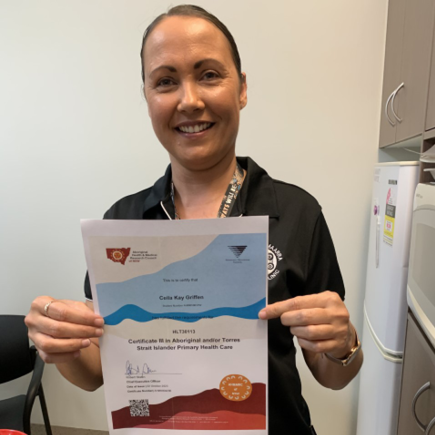
Congratulations AH&MRC RTO Graduate Celia Griffen!

“I am thrilled to attain my Aboriginal Healthcare Worker (AHW) Certificate III qualification. It has definitely been a journey for me, juggling work, education and becoming a mum again for the 6th time to my beautiful daughter.

I love my AHW role at Darrimba Maarra (Durri’s Health Outpost) as I get to work with and for my people to try to achieve the health outcomes they deserve.

I want to thank Premi Sivanesan, Traci Arkinstall and Kristilee Cruse at the AH&MRC, your support to help me finalise all the requirements are very much appreciated. I would also like to especially thank Dea Thiele for your support in helping me achieve my competencies, that has been invaluable. Finally, I would like to thank Durri for this great opportunity.

I’m looking forward to my next journey of attaining the AHW Certificate IV in PHC Practice which I want to commence in 2021.
Bring on 2021!” Celia Griffen – Darrimba Maarra


Find out more about how you can attain a certifciation through AH&MRC’s RTO, contact Premi Sivanesan by emailing Premi Sivanesan psivanesan@ahmrc.org.au or calling (02) 9212 4777.

NSW Government regrettably misses the mark to meet Closing the Gap Targets

The New South Wales (NSW) 2020 – 2021 budget raises questions about whether the NSW Government can genuinely partner with the Aboriginal health sector. The Aboriginal Health and Medical Research Council (AH&MRC) is disappointed that the budget has neglected their commitment to support Community-led approaches to Closing the Gap and that the budget made no specific investment to prioritise Aboriginal health in NSW.

The AH&MRC welcomes the promise of $20 million dollars over four years but is unsure how this can be effectively used to drive real change and improve health outcomes across 16 Closing the Gap targets. While the health of Aboriginal and Torres Strait Islander peoples is gradually improving, the target to close the gap in life expectancy by 2031 is not on track.

“If we are to meet the target to close the gap in life expectancy by 2031, we urgently need more funding. With only $5 million dollars per year, split across the 16 Closing the Gap Targets, it is difficult to see any meaningful commitment from the Government,” said Robert Skeen, CEO at the AH&MRC.

The NSW Budget was an opportunity for the Government to uphold their commitment to the National Agreement and ensure they are funding and resourcing ACCHOs to have equal participation in the priority reforms at a state level.  The AH&MRC had held hopes for the budget to reflect a shift away from the NSW Government’s previous lack of support for the sector.

“Aboriginal people, just like anyone else, are more likely to use healthcare services that are culturally appropriate and in a space that they feel comfortable. Ensuring our ACCHOs are equipped and resourced to meet their needs would have seen an improvement of the overall health and wellbeing of our people,” said Robert Skeen.

Even the lack of inclusive imagery in the graphic design of the publication, reflects the Government’s broader lack of understanding that the Aboriginal Community Controlled Health sector is central to the health and wellbeing of Aboriginal people in NSW.

“Our strong response to COVID-19 is because ACCHOs are at the heart of Communities, driving real health outcomes for Aboriginal people. We want more funding so we can continue to deliver culturally safe, and Community-led initiatives to work towards the Closing the Gap targets,” said Robert Skeen.

ACCHOs continue to do a remarkable job keeping Communities safe during the COVID-19 outbreak – with not a single death caused from the virus. This is a testament to the strength and important role the sector plays.

The AH&MRC will continue to work with industry partners to push Governments to fulfil their commitments to Closing the Gap in the next budget cycle, and ensure the Aboriginal Community Controlled Health Sector is adequately resourced to continue to deliver the best healthcare services for Aboriginal people in NSW.

 About us

The AH&MRC ensures ACCHOs across NSW have access to an adequately resourced and skilled workforce to provide high-quality health care services for Aboriginal Communities. As the Peak Body for Aboriginal Health in NSW the AH&MRC represents the rights and interests of 47 Member Services, who are an integral part of Aboriginal Communities

For more information or media enquiries please contact:

Nadia Ruben, Marketing and Communications Manager.

E: nruben@ahmrc.org.au | T +61 2 9212 4777
My Health Record: Providing patients with coordinated health care services

Do your patients find it hard to keep track of their medical results, hand-outs, doctors’ notes and other important paper documents? Do they see a specialist only to realise they are a little unsure of their previous medical history? If your patient answer yes to any of these questions, they would benefit from uploading their records to  My Health Record.

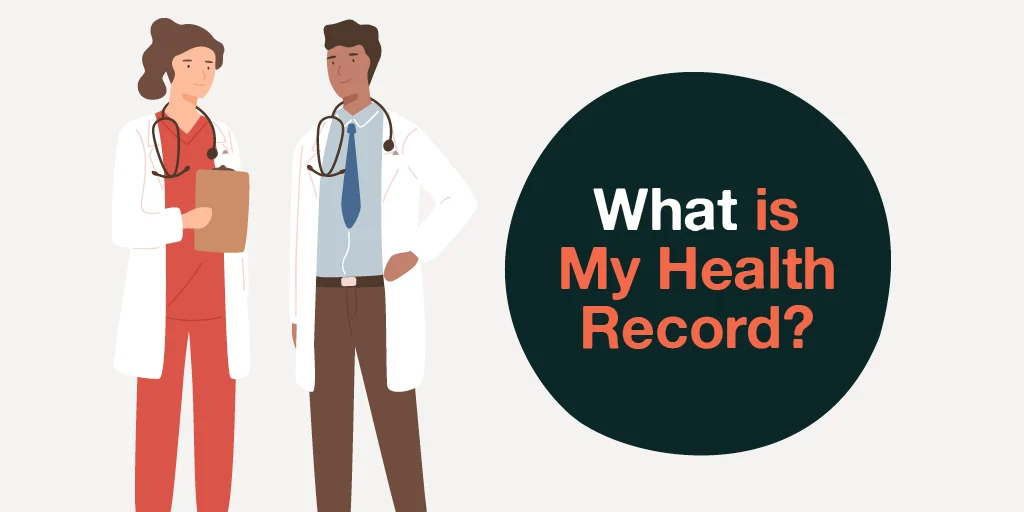
What is My Health Record?

My Health Record is an online summary of your patient’s medical information, that they choose to keep online in the one place. Healthcare providers from different medical services can access patients’ medical information quickly to help coordinate the best level of care.

Healthcare professionals can view someone’s My Health Record if their patient invites them to manage their record (nominated representatives). Someone can also be made responsible to manage a patient’s record if they are not able to do this (authorised representatives).

 How can My Health Record help provide more comprehensive care for my patients?

Through My Health Record, healthcare providers can gain a more holistic picture of their patient’s health by drawing from different medical information and improve their patient’s treatment and health outcomes.

Benefits of My Health Record for healthcare providers include:

  • Easy to view and add patient health information.
  • Access timely information about their patients e.g. prescriptions, pathology reports etc.
  • Important medical information is stored in one location and is easily available – especially in case of an emergency.

How can My Health Record help my patient?

My Health Record helps your patient self-manage their medical information. They can nominate which healthcare providers can see their health details by updating their privacy settings. Patients can also set alerts for when someone looks at their records, enabling them control over how their personal medical information is accessed and utilised. Patients can use a My Health Record to;

  • View and manage their health information.
  • See tests results, prescriptions, health provider notes
  • Add their own notes during an appointment
  • Update personal information including whether they identify as Aboriginal and/or Torres Strait Islander person. This information helps to create a more informed care plan for the patient and medical professionals to work from.

Sign up for My Health Record?

As of 31 January 2019, a My Health Record was created for everyone with the option for people to opt out. The new permanently delete function gives people a choice about how they want to manage their health and care. Deleting your health record removes all your data from the platform.

Children can register for their own My Health Record from the age of 14. Parents/guardians will no longer be able to look see any health information unless they are invited to be nominated representative. If patient’s are over 14 and would like to register for My Health Record:

  1. Go to My Gov to sign in to one’s myGov account.
  2. Select Services
  3. Select Link another service
  4. Select My Health Record

If your patient does not have a myGov account, they can set one up at My Gov.

For more information about My Health Record and how it can benefit you and your patients please contact Aashima Bhatnagar, AH&MRC Data and Systems Officer via email: Abhatnagar@ahmrc.org.au

My Health Record: Your Health in Your Hands

Do you have lots of medical documents? Ever found it hard to keep track of medical results, hand-outs, doctors’ notes and other important paper important papers? Have you gone to see a new GP only to realise they have no record of your previous medical history? If you answered yes to any of these questions, you would benefit from registering to My Health Record allowing your doctor to upload documents to My Health Record.

What is My Health Record?

My Health Record is an online summary of all your important medical information, that patient agrees to store in the one place. It allows healthcare providers from different services to access your medical information, saving time and correspondence between yourself and various medical providers.

Apart from you, the only people who can view or access your My Health Record are your healthcare providers, people you invite to help you manage your record (nominated representatives) and people who manage your record for you, if you are not able to (authorised representatives).

What does My Health Record help with?

My Health record can help you to self-manage all your medical information. You can nominate which healthcare providers can see your health details by updating your privacy settings. You can also set up alerts for when someone looks at your records, enabling you to choose how your medical information is accessed and utilised. Through My Health Record, healthcare providers can paint a more holistic picture of your health by drawing from various sources, which in turn helps to improve your treatment and health outcomes.

What can My Health Record be used for?

My Health Record can be used to view and manage your health information. It allows you to see tests results, prescriptions, and health provider notes. You will also be able to add your own notes for health providers to view during your appointments. It is easy to update your personal information using My Health Record, including whether you identify as Aboriginal and/or Torres Strait Islander. This information helps to create a more informed care plan for yourself and medical professionals to work from.

How do I sign up for my Health Record?

You can sign up for your own My Health Record from the age of 14. Once you sign up for your own record, your parents/guardians will no longer be able to look at your record unless you invite them to be nominated as a representative. If you are over 14 and would like to sign up for your own My Health Record simply;

  1. Go to My Gov to sign in to your myGov account.
  2. Select Services
  3. Select Link another service
  4. Select My Health Record

If you do not have a myGov account, you can set one up at My Gov.

For more information about My Health Record and how it can benefit you, please contact your Local Aboriginal Medical Service or speak with your GP.

Your Care. Our Mob.

As Aboriginal people, many of us believe you are born from the earth to walk the earth, and when the time comes, your Spirit returns to the earth. How you return to the earth, and the peace your loved ones experience during that time are all important parts of our culture and grief journey.

Despite advances in modern medicine, sometimes medical conditions such as advanced kidney, lung, heart disease, dementia and other age-related deteriorating conditions cannot be fixed. If a person has a life-limiting condition, meaning they cannot be cured and it will lead to the end of their life, the focus of care shifts from cure to making sure they have the best quality of life. This is known as palliative care.

Having palliative care doesn’t necessarily mean that a person is likely to pass soon. You can receive palliative care for years. It can take place on Country, at home, in a residential aged care facility, in a hospice, or at a hospital.

It is important to highlight that we, as Aboriginal and Torres Strait Islander peoples, have a heritage of loss.  For a person close to passing and for their loved ones, the impact of the loss and grief is compounded by earlier experiences. Many of us avoid talking about the end of life journeys with our clients, community or family members and are less likely to access palliative care and so the cycle of grief and trauma continues.

Palliative care can be a positive experience. It allows people to be comfortable at the end of their lives. It eases their concerns and that of their loved one and allows time to be spent together enjoyably.  Most importantly, palliative care honours the person and their wishes. Accessing palliative care and having a positive experience can bring much healing to loved ones for many years after the loved one passes and begin to break cycles of grief and trauma.

This is why palliative care is important for our mob.

Whether you are a health professional, a brother, sister, cousin, mother, father, aunty or uncle – you have a right to palliative care and the sovereignty, dignity and respect that it brings.


If you are interested in knowing more about palliative care and how you can support you, your loved ones or your mob, Indigenous Program of Experience in the Palliative Approach (IPEPA) have free placements and training workshops available.

Please contact our NSW Aboriginal Team, Nathan Taylor for more information at SLHD-PEPA@health.nsw.gov.au or follow IPEPA on Facebook

Authors –

Nicole Hewitt, Isaac Simon and Nathan Taylor at IPEPA

Innovative #swab4mob campaign launches to encourage COVID-19 testing and keep Aboriginal Communities safe, healthy and strong

The Aboriginal Health and Medical Research Council of NSW (AH&MRC) have partnered with The National Association of Aboriginal and Torres Strait Islander Health Workers and Practitioners (NAATSIHWP) and other Aboriginal organisations to launch #swab4mob; a campaign aimed at urging Aboriginal Communities to protect their families by getting COVID-19 testing if they feel unwell.

While there is currently no available COVID-19 vaccine or cure, it is essential that continued testing rates are maintained to help with community control of the virus and assist with contact tracing.

AH&MRC CEO Robert Skeen stated: “The collective voice of Aboriginal Communities and Aboriginal health organisations play an important role to help people maintain COVID-19-safe behaviours and high testing rates while there is no cure or vaccine available for COVID-19. Wash your hands, wear a mask in crowded areas, and if you are feeling unwell, even just a slightly, play your part to protect your Community and get a COVID-19 test.”

The recent COVID-19 outbreak in Adelaide is a wake-up call for all of us and a warning becoming complacent to this pandemic can have significant effects. This virus is not going anywhere anytime soon, and we must be as vigilant as ever.

Chairman of NAATSIHWP, David Follent stated: “Our Mob, have been on the front-foot with the COVID pandemic and really did a deadly job when it comes to protecting our communities.  We focused on protecting our Elders and the vulnerable! You mob, it’s not over yet!  Let’s keep up the good work and #Swab4Mob”.

AH&MRC encourages everyone to get involved by posting a #swab4mob video on their own social media channels and tagging the AH&MRC. These snippets of content will be long enough to engage viewers online.

“We believe this grassroots campaign plays to our strengths, and the power of Mob to keep each other safe. We have done an incredible job to keep COVID out of Aboriginal Communities, and we will continue to find innovative ways to get important messages out,” said Robert Skeen.

The #swab4mob campaign will be a multi-platform approach encompassing social media and radio interviews and advertising on 93.7FM Koori Radio.

About us

The AH&MRC assists ACCHOs across NSW to ensure they have access to an adequately resourced and skilled workforce to provide high-quality health care services for Aboriginal communities. As the Peak Body for Aboriginal Health in NSW the AH&MRC represents the rights and interests of 47 Member Services.

#swab4mob Videos:

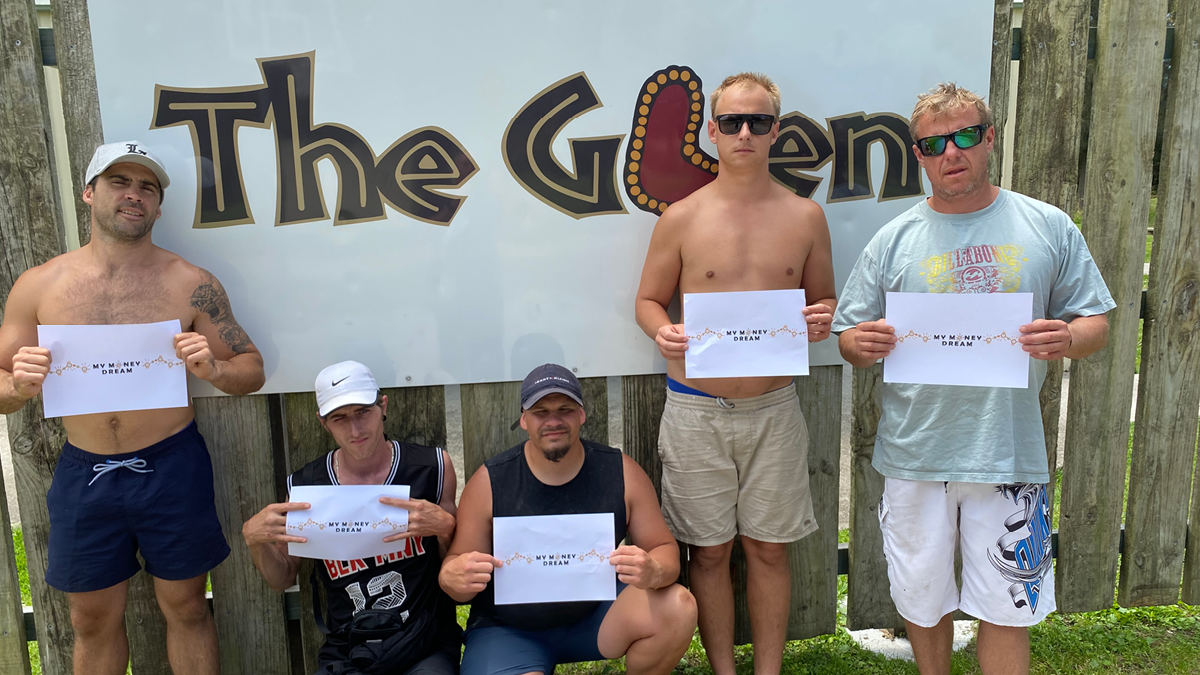
My Money Dream fosters financial knowledge and literacy at The Glen

The team at The Glen Centre are a passionate bunch. Helping people be their best self is what motivates them. Their successful 12-week drug and alcohol rehabilitation program includes individual and group counselling on education support, work programs, specialised services for grief, trauma, financial, gambling and anger management.

Early this year, The Glen Centre introduced My Money Dream – a series of educational modules to help clients build money management skills and reduce their financial stress. Financial literacy is important. It plays a crucial role, and can help increase mental health, well-being and reduce substance abuse in the long term.

“We haven’t had the opportunity to learn from our parents, or grandparents on how to manage money. White fellas have been having money conversations for hundreds of years, while Aboriginal people have worked on a different platform for tens of thousands of years, ”said Chris.

Developed by the First Nations Foundation, My Money Dream aims to bridge the financial literacy gap between Indigenous Australians and the general population. The modules include money and culture, budgeting, banking, superannuation, insurance, loans, and credit, buying a home, buying a car and financial first-aid.

While at a conference, Josh realised the modules allowed for a culturally safe way to start a conversation about money. Working together, the team decided to bring money talk to the table. The structured online content and individual, online budgeting tools for their clients made the program stand out.

“It’s just a win to have a conversation about money. We start yarning, and people can share their stories in a safe and non-judging environment. We have all made poor money choices in the past. It’s how we manage our money moving forward that matters,” said Josh.

Aboriginal culture is centred on family and tribe. It focuses on the success of the Community, over personal wealth and the financial success of individuals. The online modules outline how traditional Aboriginal values relating to money are the polar opposite to western societal values.

“It explains why we are in the situation we are in. It sets the historic context and then helps us move forward with budgeting tools and skills on how to say no to the mob!” said Chris.

The supportive environment fostered at The Glen is the perfect setting to start these conversations. Clients can use the online My Money Dream tools in private, or choose to join in the group discussion. The flexibility of having online modules increases engagement, allowing people to come back in their own time. The 12-month license to access the online financial tools means people can continue to harness their financial knowledge after they leave the rehabilitation program.

“No one likes the word budget. By the end of the program, we see a shift. The word budget is a good word –  a way to decide where you want to spend your money – nappies or alcohol?” said Josh.

The Glen team will continue to offer the My Money Dream modules as part of their 12-week drug and alcohol rehabilitation program. While some people may never think about budgeting again, it has helped others to change their financial mindset and behaviours. Some collect receipts to track their spending habits. Others ask a trusted family member to oversee their finances.

“It’s more than just modules. It’s about helping people minimise stress in their daily lives. As part of our outreach patient program, we ask if having a budget has improved their mental health, relationships and reduced their substance abuse,” said Marty.

“It is fantastic to see our clients have a light-bulb moment, when they get the power of budgeting. The modules have also helped our staff improve their financial literacy too,” said Joe.

The Glen has made a positive contribution to a much broader vision to increase the financial knowledge and skills of Indigenous Australians, to ensure they can best manage their finances into the future.


Thank you to The Glen for their commitment to improving the health and wellbeing of their clients and for sharing their story with us.

The AH&MRC invites all Member Services to learn more about the My Money Dream educational modules by contacting Public Health Officer, Zoe Mead on zmead@ahmrc.org.au for more information.