





Our People to Live Stronger & Longer

POLICY UPDATE – Capacity Building training program

AH&MRC Policy and Non-Profit Training (NPT) have developed a Capacity Building training program specifically for our member services. The training program has been developed to build the capacity of staff at member services to ensure they have the skills required to advocate and manage their services. The training program will include workshops on different topics including:

  • Grant writing
  • Tender writing
  •  Project management
  •  Advocacy
  •  Project evaluation or Governance

NPT is a business supported with education and training professionals who have been managing and providing training services for Australian non-profit organisations for over 25 years. NPT has extensive experience in delivering training in the not-for-profit sector to peak bodies, ACCHSs, organisations, associations, and community groups across Australia.

Similar training was conducted earlier this year that focussed on policy development. We received positive feedback from our member services, indicating that similar training programs would be beneficial in building capacity for staff at member services.

Workshops will be capped at 25 students per class and will run at various times across 2022 and 2023. A doddle poll will be circulated so that you can nominate what days and times work for your service. Workshops will be run virtually to ensure everyone can attend the workshops, relevant zoom links will be circulated. We are seeking EOI’s for your staff to attend these training workshops. Please note that this is capped at one person per service. Ideally, this should be someone who does the policy or program related work so that they can build capacity within their service.

The workshops will include;

Grant Writing Training

  • There are many grants available to non-profit organisations and with a workforce with limited time to dedicate to applying for grants, how do you decide which ones are best?
  • This workshop is designed to assist grant writers and fundraising committees to understand the broader picture of grant giving and provide a base for applying for a range of grants for their organisation.

Tender Writing Training

  • Each year, federal, state and local governments as well as businesses and charities invite not-for-profit and for-profit organisations to submit competitive bids for the supply of goods and services.
  • This workshop will provide participants with the tools to effectively plan the tender response to reduce the fatigue of tender writing and improve performance and success rate

Project Management Training

  • Projects in the not-for-profit sector can be challenging with limited budgets, answering to Boards and managing volunteering staff.
  • This workshop will provide participants with the tools to effectively plan, budget, lead and manage a team, monitor and report on projects within the non-profit sector.

Advocacy

  • Advocacy focuses on addressing specific needs and issues within our complex world.
  • This workshop will provide participants with an understanding of how to put themselves in the shoes of others so they can effectively influence change.
  • The participants will be engaged in discussions, planning and scenario activities to bring the role of the changemaker to life.

Project Evaluation

  • Projects are developed because there is a realisation that something needs to change or improve.
  • This workshop will provide participants with ideas on how to think critically about the need for change and the evidence that exists to support change.

Governance

  • Governance is the system of checks and balances for leaders in not for profit organisations which leads to a positive Board/Committee member experience and proper management of conflicts of interest and risk.
  • This program is practical, informative, comprehensive, fun and effective for all members of the board.
  • It is customised with the outcome framework, which guides and prioritises the work plan for the Board to achieve best practice governance

We understand that with 47 member services, we will not be able to cover everyone within the class caps. It is out intent to run this initial program as a pilot. We are looking to run the program again, if successful, for the services that miss out. We may also expand the program in future to include other courses.

If you would like to be included in the training, please email policy@ahmrc.org.au

HEALTH PROGRAMS UPDATE – ASHHN Network Meeting

ASHHN Network Meeting of 25 August 2022

Colin and Debbie, both AOD and Mental Health Program officers jointly chaired the ASHHN Network meeting on 25 August with several members. This meeting was very productive and positive. ASHHN members have been invited to offer suggestions for subject matter and content for the AH&MRC’s Health Programs regional forums.

There has been a suggestion of geo-specific regional forums to lesson the burden of time loss within the members workplace.

Sharing of emails addresses among the network will also be set up so workers can network informally.

All ASHHN members have been encouraged to reach out with suggestions on resources that would be useful to them. AH&MRC will then look to develop these resources.

There was also a discussion about a new drug of concern which is called “Croc/Crocodile”, this drug is made from Battery fluids and has serious health risks. This drug has not made it to Australian shores yet, however being aware of its existence and becoming fully informed places our service members ahead of this problematic situation.

There was a positive discussion about developing an updated version of a SEWB handbook, it has been approximately 8 years since a handbook of this nature was at hand.

There were discussions about “Outreach Training”, where the AH&MRC takes training to the ACCHS’ sites across the state rather than ACCHS’ staff coming to Sydney, the members discussed the financial burden that is placed on them when sending staff to train. The members will be sending through ideas on training needs for staff.

A suggestion of the AH&MRC producing an ACCHS Induction Manual was positively received by ASHHN members at the meeting and the idea of the manual being online was suggested.

Both Deb and Col also brought forward an idea of the AH&MRC establishing a Member Service Support Desk for workers seeking to debrief and possibly receiving some supervision via phone was viewed with enthusiasm. Members agreeing that by reaching out to others who are familiar with the sector and the complexities within Aboriginal communities is a refreshing and positive idea, which in turn would help minimise burnout by workers. Colin and Deb will continue to follow up further during site visits and progress this plan.

Overall, this was a really positive meeting and both Col and Deb walked away feeling energised and positive that this network felt positive about future possibilities and support offered by AH&MRC.

HEALTH PROGRAMS UPDATE – National Disability Summitt

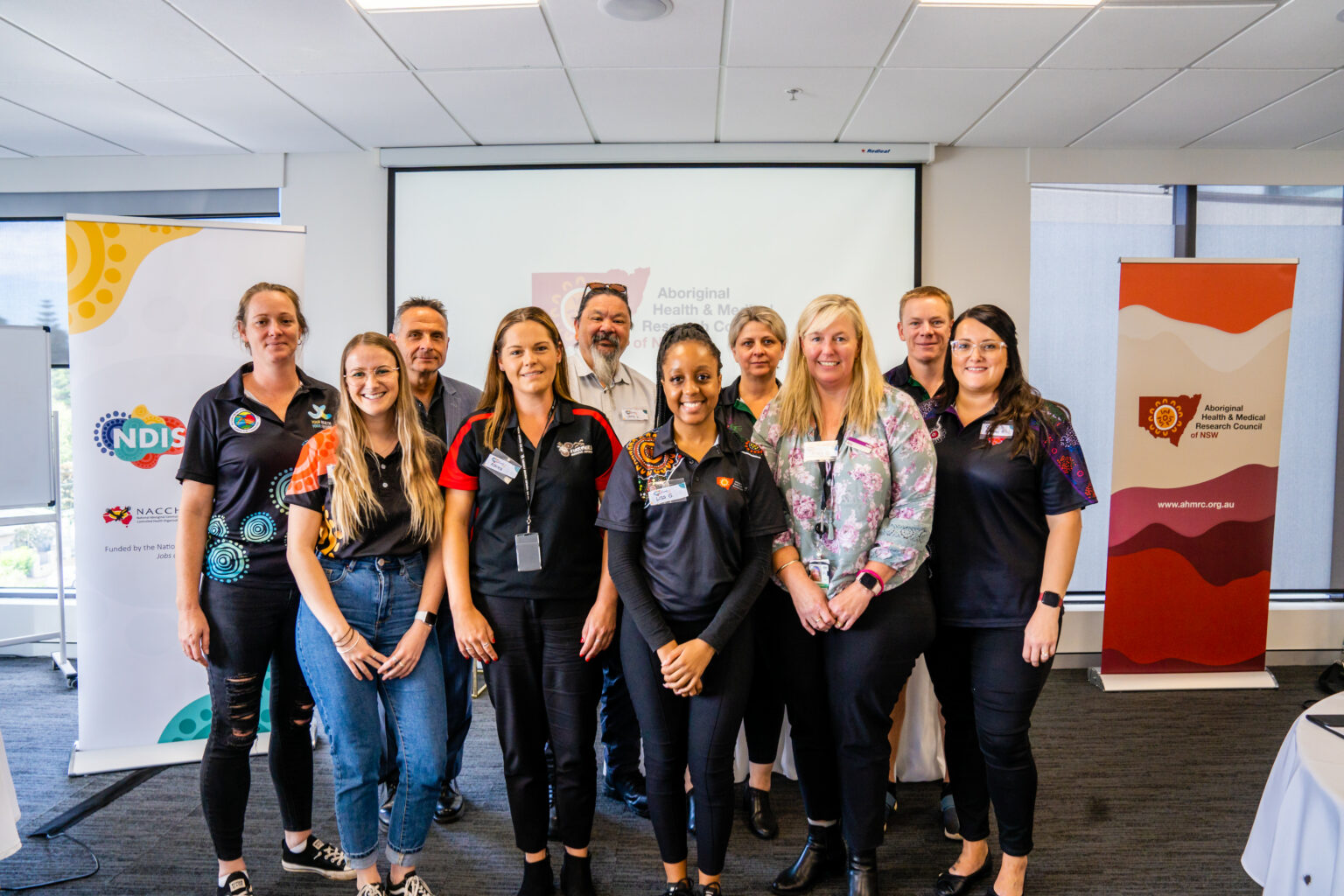
Health Programs Update  – NDIS

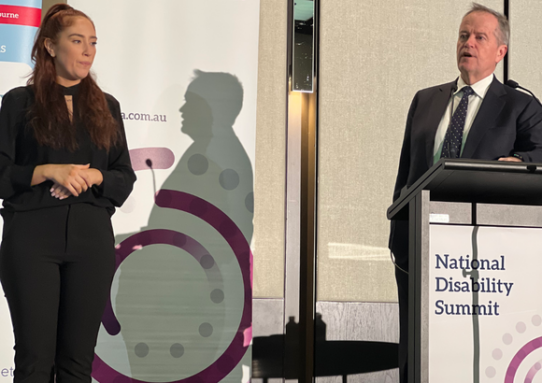
As the program officer for NDIS and aged care, I had the privilege of attending the 13th annual National Disability Summit. The event brought together major stakeholders, including The Hon Bill Shorten (Minister for NDIS) and Tracy Mackey (Commissioner at the Quality & Safeguards Commission), state government agencies, service providers, participants, and their families. With such a wide variety of stakeholders in the room, it was only fitting that innovation and co-design were at the forefront of every discussion.

Please find below a summary of the key priorities for NDSI, as stated by the Hon Bill Shorten MP.

  • The MP recognises that the NDIS is not functioning at its best, nor is it achieving what it set out to. As such, a review of the NDIS will occur, in which there will be co-design with participants and an increase in the number leadership positions held by people with disabilities.
  • Emergency preparedness to ensure people with disabilities are not left without support as they often were at the height of the COVID-19 pandemic.
  • Addressing the delays in accessing services by empowering planners to make decisions. This will reduce the stop/start nature of access request and in turn reduce wait times. The MP was particularly concerned about the number of participants whose supports are delayed during and upon returning to the community post hospital admission.
  • Addressing the rise in fraudulent activity. The MP hopes to do this without creating barriers for those who need the support.
  • Will begin the process of addressing workforce challenges across the sector.
  • Appointment of a new CEO for the agency.

NSW Government must do more for rural, regional and remote communities

The NSW government recently released its response to the Inquiry into health outcomes and access to health and hospital services in rural, regional and remote New South Wales. The Inquiry, which received over 700 submissions and held 15 hearings highlighted the challenges faced by those living in outer regions, particularly Aboriginal and Torres Strait Islander communities. Key issues raised by stakeholders included:

  • the need for culturally safe services;
  • the need for formalised partnerships between ACCHOs and LHDs (mainstream services);
  • gaps in service delivery due to lack of clarity regarding shared responsibilities between the state and Federal governments;
  • workforce challenges including ongoing shortages of Aboriginal health workers and other specialists; and
  • service access challenges, due to remoteness and high service costs;


In its own submission to the Committee, the AH&MRC called for a review of existing systems and policies and the implementation of formal partnerships between LHDs and ACCHOs. Further, improved models of health service delivery that promote culturally appropriate connected care including processes for information sharing and transition in-transition out planning arrangements.

While the NSW Government accepted 41 of the Committee’s 44 recommendations, much of the rhetoric in the response focussed on what government was already doing, with very little in the way of new commitments.

In response to the committee’s recommendations to strengthen the Aboriginal health workforce in remote areas, the government notes its $883 million workforce package the 2022-23, which includes funding for Aboriginal nurse cadetships. While this is a welcome announcement, greater investment is needed to support the broader Aboriginal workforce and address critical specialists’ shortages in these areas.

With regard to the Committee’s recommendations around partnerships, the government notes its existing policies which seek to support partnerships with our sector. We know from engagement with ACCHOs across the state that these policies have fallen short, with very little Aboriginal representation LHD boards and many partnerships operating as box-ticking exercises.

In response to recommendations around strengthening cultural safety, the government points to the Aboriginal Cultural Engagement Self-Assessment Tool, which is intended to support health services to assess whether there has been a measured approach towards the delivery of culturally safe and accessible health services for Aboriginal patients and clients. While the AH&MRC notes that this tool is a positive step forward, more work needs to be done in supporting cultural safety. This can only be done through collaboration with the ACCHO sector and communities.

While there has been some progress made since the Inquiry, it is critical that greater efforts are made by government to address the challenges faced by those in remote areas, particularly Aboriginal and Torres Strait Islander communities.

The AH&MRC notes that work is underway to develop the new NSW Regional Health Plan asks the government to consider its recommendations to the Committee and undertake genuine engagement with Aboriginal communities and ACCHOs in this process.

Download the Media Release

NSW Government and CAPO launch the 2022-2024 NSW Closing the Gap Implementation Plan

The Aboriginal Health and Medical Research Council (AH&MRC) is pleased to announce the release of the 2022-2024 NSW Closing the Gap Implementation Plan.  

The 2021 NSW Implementation Plan marked the beginning of the NSW Government’s commitment to partner with Aboriginal organisations to fulfil the promise of the National Agreement on Closing the Gap. With the first Implementation Plan coming to a close, NSW Government and CAPO have developed a new agenda, which will be implemented over the next two years.  

 The 2022-2024 NSW Closing the Gap Implementation Plan features a number of new initiatives including growing the Aboriginal community-controlled sector to provide culturally appropriate support for Aboriginal children and young people entering out of home car, transforming the youth justice system to best support the needs and goals of Aboriginal young people, as well as providing pathways for Aboriginal communities to have access to shared-data, enabling local decision-making.  

Some of the highlights for the Aboriginal health sector include: 

  • the development of a new 24hr Aboriginal Health Practitioner (AHP) Emergency Department Model to ensure that there is cultural safety in NSW services; 
  • work to explore more birthing on Country models of maternity care in partnership with Aboriginal Community Controlled Health Services; and 
  • the expansion of the Building Resilience initiative and investment in culturally safe mental health models of care.  

These initiatives have been developed through extensive consultation with Aboriginal communities, who we will work to engage throughout their implementation, in line with our commitment to self-determination.  

NSW CAPO Co-Chair and AH&MRC CEO Robert Skeen welcomed the launch of the Implementation Plan and reaffirmed NSW CAPO’s commitment to the Partnership, “I am confident that this plan will create real change and look forward to continuing to work in genuine partnership with the NSW Government to improve outcomes for Aboriginal communities across the state” he said.  

 The full Implementation Plan can be found here 

 Contact: policy@ahmrc.org.au 

Download the Media Release

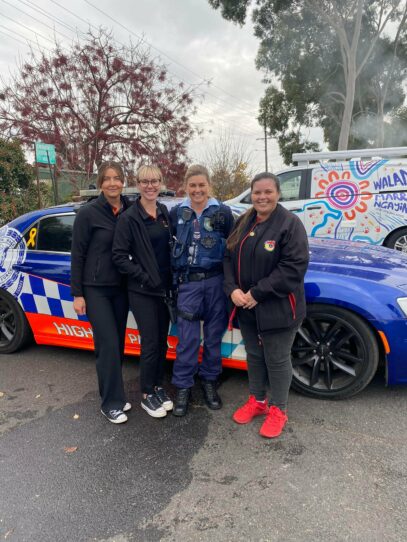
Yoorana Gunya launches their wellness van for holistic care.

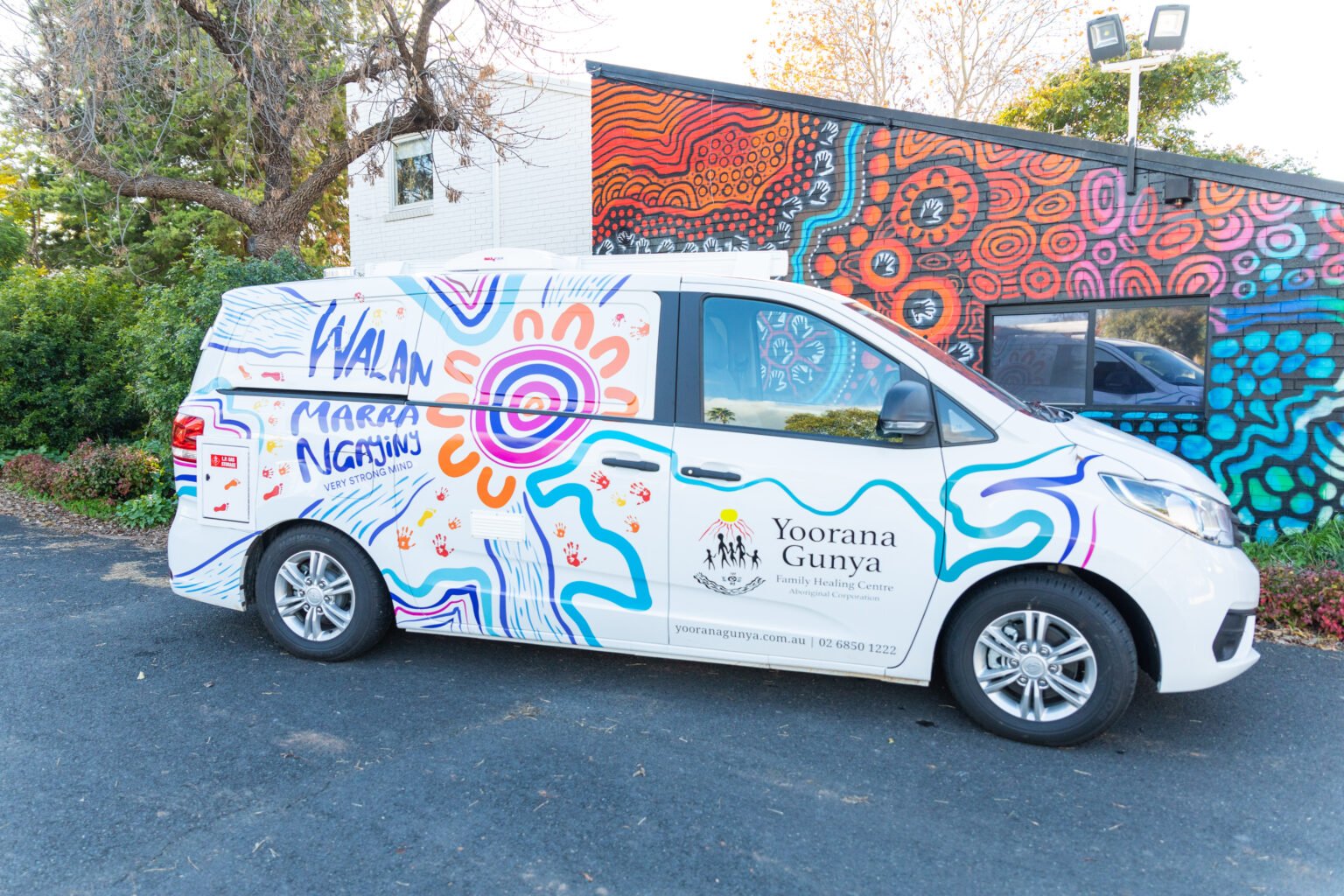
Yoorana Gunya has launched their wellness van called Walan Marra Ngayiny translating to very strong mind in Wiradjuri.

The purpose of the van is for Yoorana Gunya to continue to provide a holistic model of care to their clients by being able to take their programs out on country and to utilise the van to provide coffee, water and fresh food to our clients when participating in programs.

Yoorana Gunya envision being able to set up the van out on country on the river and hold a variety of programs including women’s and men’s groups, Aboriginal Mental Health First Aid training and more.

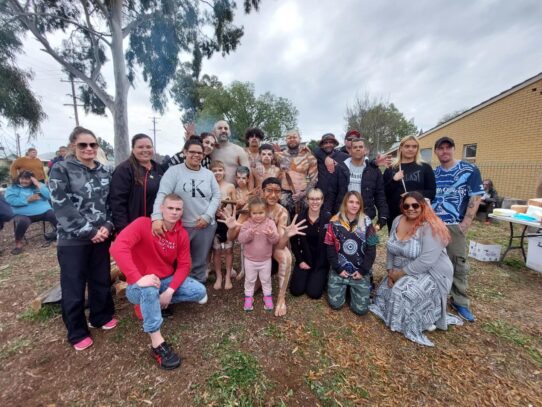
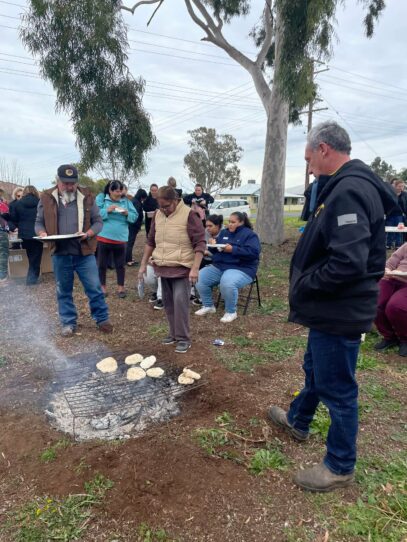
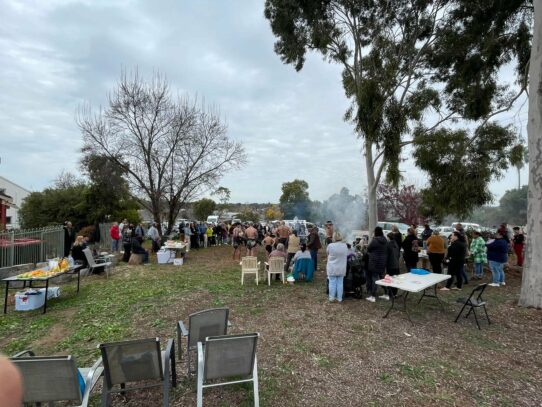
Yoorana Gunya held a Suicide Prevention and Mental Health Awareness day on Thursday 30th June to officially launch their wellness van, the day consisted of traditional dances by Dinawans Connection, Johnny Cakes made by a Yoorana Gunya Director aunty Mavis, cultural art activities, information regarding support available and of course coffee from our van and a BBQ. The wellness van has also made a trip out to Weigelli Centre Aboriginal Corporation.

After the negative impact COVID-19 has had on our communities, Yoorana Gunya was thrilled to be able to hold an event where the community can join together and raise awareness about mental health, whilst celebrating with good food, culture, community connection and overall allowing participating to enhance their own social & emotional wellbeing through cultural connection.

Here is the Facebook link to the Prime news video:  https://www.facebook.com/PRIME7NewsCentralWest/videos/1091898304729280/?extid=NS-UNK-UNK-UNK-IOS_GK0T-GK1C-GK2C

Preventative Health Conference 2022

Date: 11-13th May 2022

Location: Brisbane Convention and Exhibition Centre, QLD

Hosted by: Public Health Association Australia (PHAA)

Attended by & prepared by: Shelley Du

AH&MRC supported 3 staff from the Public Health Intelligence unit and 8 staff from our member services to attend the Preventative Health Conference 2022. The theme was accelerating action and over the 3 days, delegates were able to hear from keynote speakers, researchers and peers in the sphere of preventative health who brought their invaluable experience and keen insights to share.

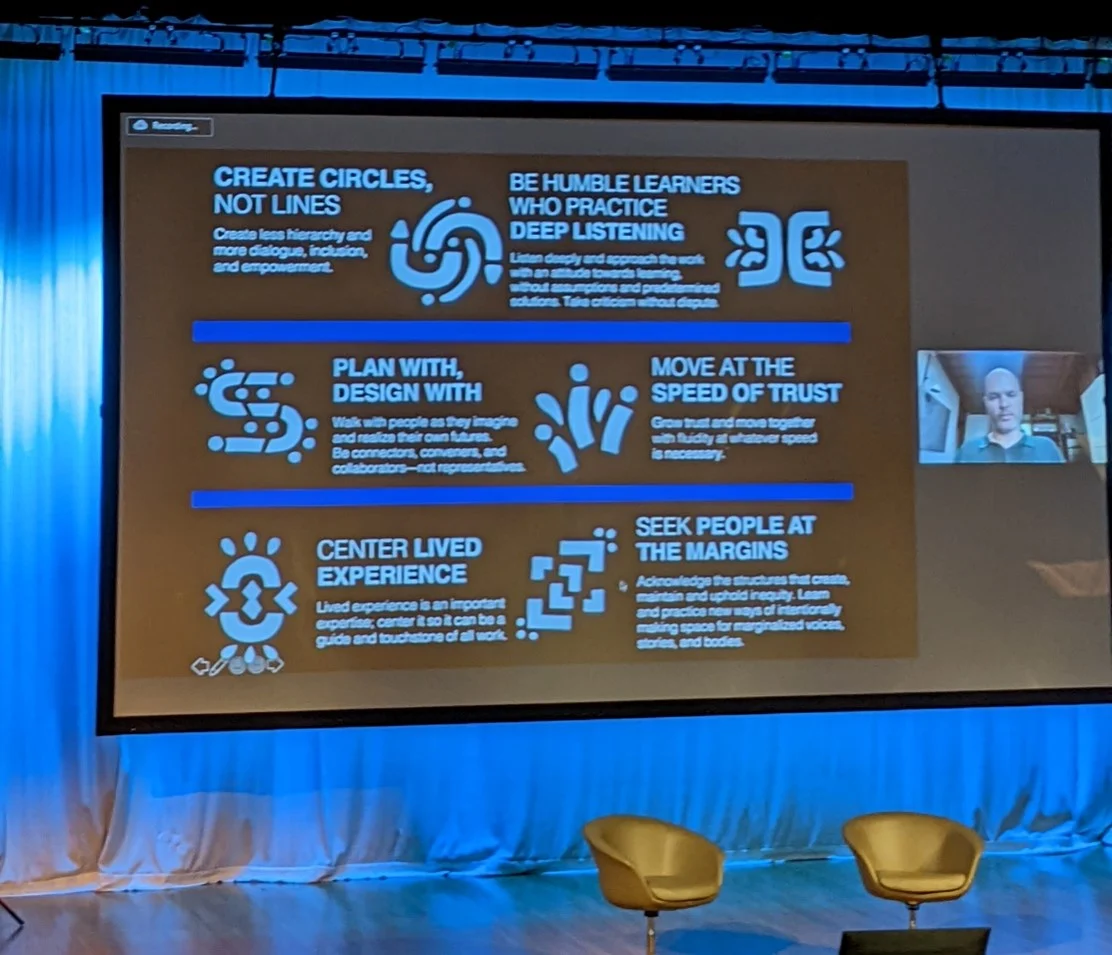
Of particular note were Professor Yin Paradies, John Safran and A/Prof Tinashe Dune. Professor Paradies spoke about disrupting whiteness in preventative health and persuaded delegates to re-evaluate their practice and consider how racism is pervasive in health and society (see picture below). Writer John Safran illuminated the challenges of language and policy in e-cigarettes and IQOS heated tobacco sticks and the might of tobacco corporations. A/Prof Dune spoke about the importance of having clinicians and health workers who shared a cultural background with those they were caring for and the importance of supporting and building their workforce.

The 8 staff who were supported to attend from our member services spanned 5 ACCHOs and included Aboriginal health workers, practitioners, nurses, a community development officer and admin staff.

The staff from AH&MRC who were supported the Preventative Health conference found the presentations engaging, relevant to their work and were inspired by the many innovative ways to solve healthcare problems. The staff from member services who attended were surveyed post-conference. There were 2 responses and while they did not find the conference very relevant to their work, they found the exhibitions interesting and wanted more discussions around reconciliation and co-design centred around working with our Aboriginal and Torres Strait Islander patients and clients.

I am grateful to be among the delegates representing AH&MRC and bringing the knowledge I’ve learnt back to my work and to have absorbed the passion of others who work in the broader public health space.

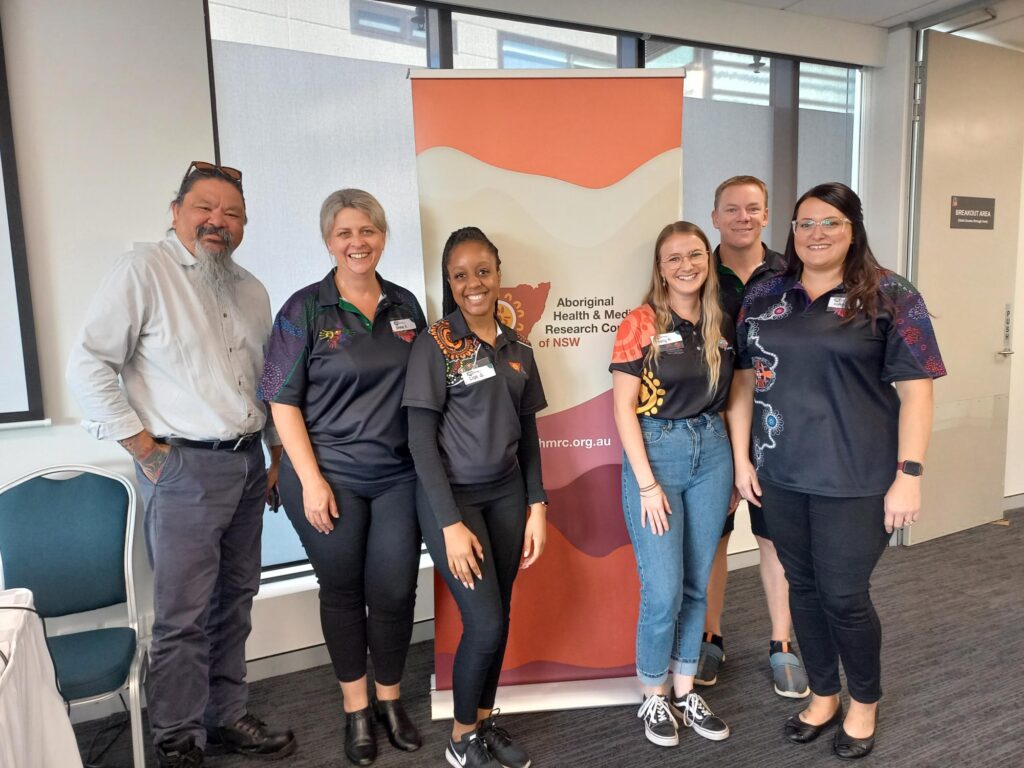
Aboriginal Health & Medical Research Council NDIS Forum 2022

On the 5th of May the AH&MRC held its first combined NDIS forum with the objective of addressing the barriers that Aboriginal communities face in engaging with the NDIS, as well as opportunities to work with industry stakeholders.

We were fortunate to hear from NDIS and community services consultant, Mathew Fante. Mathew presented us with the various ways in which ACCHOs can engage with the NDIS, as either registered or unregistered service providers. He broke down the ways in which the fee-for-service model of the
NDIS differs to more familiar models. Despite these differences, ACCHOs are able to marry the two in ways that enable business sustainability and quality service delivery. These steps are uncovered in what we call a feasibility study. This process consists of extensive market research including an assessment of local demographics. This is measured against the organisation’s current services, financials and organisational structure. By engaging in this process ACCHOs are able to make an informed decision that best meets the needs of their communities.

Mathew’s presentation was seamlessly followed by Ally O’Rourke from the NDIA’s provider engagement team. Ally answered our challenging questions on the complexities of transitioning from early childhood intervention to NDIS and the access issues faced by Aboriginal communities (which often increase with remoteness). This session gave us the opportunity to share personal experiences and discuss the on the ground barriers faced by communities. As such, we challenged the NDIA on how they plan to address the access issues faced by communities and what they are doing to close the gap. This was supported by Debbie Lee from First People’s Disability Network (FPDN), who shared on her experience as an advocate for people living with disabilities.

In her work, Debbie has developed connections with various government and non-government agencies, community members and peak bodies. Of special mention is her work with the National Indigenous Australians Agency (NIAA) on the disability strengthening plan. As part of her advocacy work, Debbie supports participants to know their rights particularly as it pertains to cultural engagement and safety. Additionally, she hopes to encourage the linkage of health and disability to establish consistency and quality of care.

Below are the contact details for the presenters, NACCHO representatives and AH&MRC who were in attendance.

AH&MRC:

Mathew Fante Consulting:

National Disability Insurance Agency:

  • Ally O’Rourke (Assistant director – co-design & engagement branch): ally.o’rourke@ndis.gov.au

First People’s Disability Network:

NACCHO:

National Aboriginal and Torres Strait Islander Eye Health Conference 2022

National Aboriginal and Torres Strait Islander Eye Health Conference 2022

“Our Vision Our Hands”(NATSIEHC22)

Date: 24th-26th May 2022

Location: Double Tree Esplanade Darwin

Hosted by: University of Melbourne & Aboriginal Medical Services Alliance Northern Territory

Attended by & prepared by: Shelley Du & Mafi Kailahi

AH&MRC supported 2 staff from the Public Health Intelligence unit to attend the NATSIEHC 2022 conference.

Day 1 – First Nations Delegates Only

Visions For Aboriginal and Torres Strait Islander Eye Health in 2030

  • WORKFORCE “Radical change in eye health education led by Aboriginal people”
  • “Every child in Australia by age 5 has an eye health assessment”
  • “Equitable access to eye health services regardless of location”
  • “Patient led technology driven eye health”
  • “Better health outcomes through ATSI co-developed pathways”
  • (Challenging concepts such as “remote”, “overcrowding” and “capacity building”)
  • “Software and algorithmic diagnosis process to revolutionise the eye care service deliver”

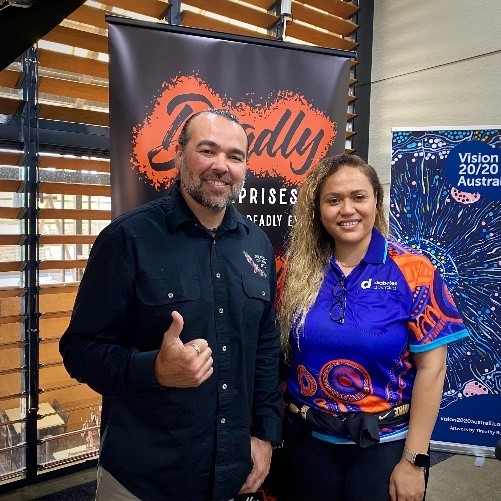
In 2022 the conference is being overseen by an Aboriginal and Torres Strait Islander leadership group, chaired by Shaun Tatipata (Pic below with Mafi Kailahi Programs Officer Ear health/Eye Health AHMRC)

The Program Advisory Group (PAG) and Conference Organising Group will report to the leadership group. Members of the PAG include representatives from AMSANT, OA, RANZCO, Vision 2020 Australia, The Fred Hollows Foundation and The Brien Holden Foundation.

The conference aims to advance the collective work of the Aboriginal and Torres Strait Islander eye health sector towards the shared goal of improving eye health access and outcomes of Aboriginal and Torres Strait Islander Australians.

Key note speakers:

  • Thomas Mayor

Thomas is a lead campaigner for the Uluru Statement from the Heart proposal for a constitutionally enshrined First Nations Voice and the author of Dear Son – Letters and Reflections from First Nations Fathers and Sons.

  • Nicole Turner

Nicole’s passion is nutrition and living a healthy lifestyle. She believes we need to give knowledge to our people about the importance of maintaining a healthy lifestyle and preventing chronic diseases.

  • Summer May Finlay

This announcement completes the keynote speaker line up for the conference and we are proud and delighted that Summer May Finlay, Thomas Mayor, Nicole Turner and Jaki Adams will be joining us and sharing their knowledge and wisdom.

  • Jaki Adams – Inaugural Jilpia Nappaljari Jones Memorial Oration

IEH is honoured to announce that the family of the late Jilpia Nappaljari Jones AM have provided their blessing for an annual invited, keynote presentation in memory of Jilpia by a female Aboriginal and/or Torres Strait Islander leader in eye health.                           

The conference brought together the Aboriginal and Torres Straight Islander eye health care workers and showcased how eye care clinicians, policy makers, researchers and non-government organisations are working with community to improve eye health access and outcomes.

Thomas Mayor made a moving speech about racism in politics and the Uluru Statement From the Heart. There were several presentations about how culturally safe projects have been carried out and different methods of community involvement to promote eye care and a focus on the environmental issues that affect health.

The conference was overseen by an Aboriginal and Torres Strait Islander leadership group and its strengths lie not only in bringing a diverse group of eye health workers together but also in its cultural messaging. Delegates had the pleasure of witnessing a welcome reception with cultural performances (see photos) and Non-First Nations delegates were taught about kinship systems while the First Nations delegates convened to discuss their visions for the future of Aboriginal and Torres Strait Islander Eye Health.

Although I work in the chronic care space, I found the methods of co-designing and community involvement creative and useful for our team to adapt in future and the presentations on diabetic retinopathy particularly valuable.

Awards Night:

  • Orange Aboriginal Medical Service (OAMS) received an Award for their Eye Care Model & AH&MRC were mentioned during the presentation of the award – OAMS were not present. Nikki Turner presented the Award to OAMS at the AH&MRC CQI event.

Day 2

Concurrent Workshop and Oral Presentation Session – Break out sessions

Workshop 2: Retinal Cameras in Primary Care. Neville Turner, Kristin Bell

Non-mydriatic retinal camera

Learning how to use the retinal camera and read and detect any eye health issues.

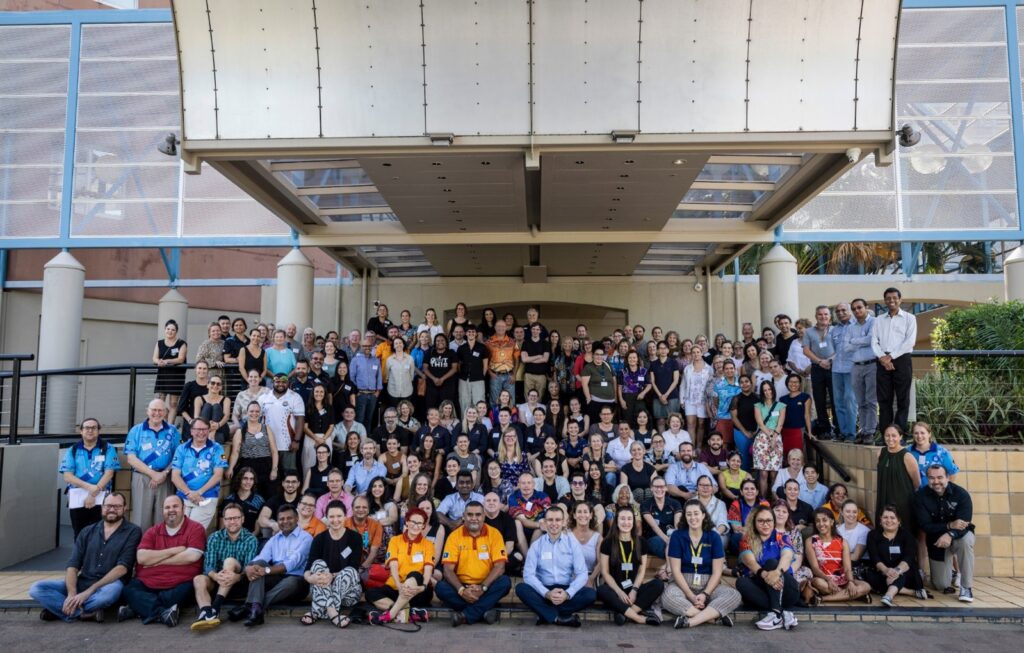
(Break to take group pic of all delegates attended the conference – Melbourne Uni)

Closing Session with Chairs: Shaun Tatipata and Anne-Marie Banfield

Included:

  • A Presentation from Kristopher Rallah-Baker
  • Report back from Visions 2030 – Potentially forming a First Nations Eye Health Alliance
  • Report back from Campfire Session Topics:
  • National peak body for Aboriginal & Torres Strait Islander eye health
  • Inreach eye care- a group of private practices keen to deliver cultural safe care
  • Diabetic retinopathy treatment and cost
  • Reconciliation Action Plans (RAPs) for eye care organisations: advice & lessons
  • Aboriginal and Torres Strait Islander optometry student recruitment and Aboriginal and Torres Strait Islander

Student experiences

  • Department of Health
  • Tasmanian Aboriginal and Torres Strait Islander eye care
  • Transitioning funding to Aboriginal-led solution
  • RTO delivering the full eye health elective in the AHW/P qualifications
  • Linking reform – primary care, NRHA?MBS, Indigenous health
  • Indigenous optometry students recruitment

NDIS Ready Yarning Circle

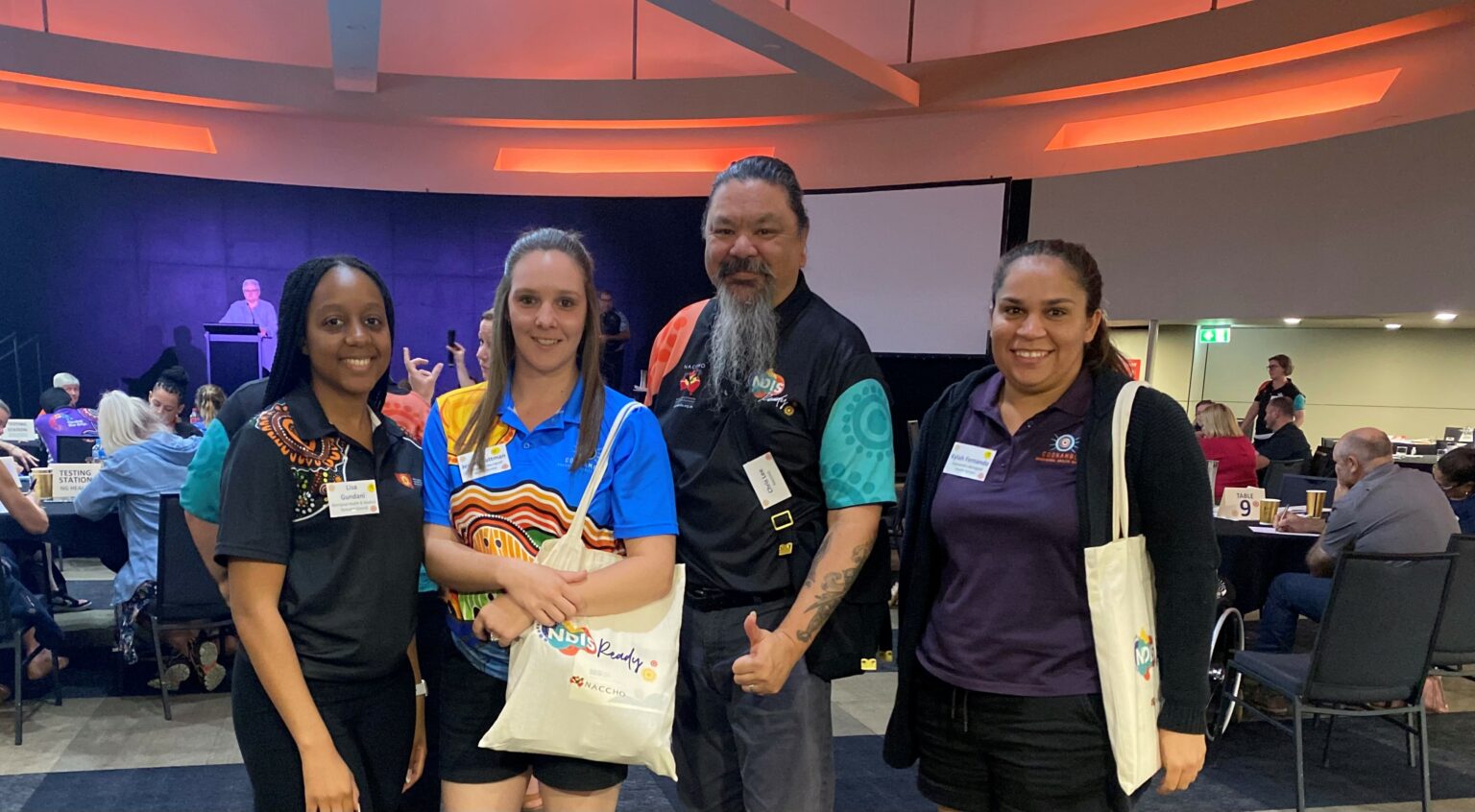
Thank you to NACCHO for hosting the NDIS Ready Yarning Circle (for remote and very remote ACCHOs) in Darwin. With attendees from various government departments, social services, advocacy groups and affiliates, the two-day event was both a learning and networking opportunity.

It was insightful to hear how ACCHOs from across the country have navigated the scheme and made it work for their communities. They shared their solutions to common barriers, and their tips and tricks to success in the NDIS space. A key feature of these discussions was the need for more sustainable ways of delivering holistic disability support. ACCHOs have achieved this by developing models of care that align with their clinical services and the NDIS practice standards.

In addition to hearing from ACCHOs, attendees participated in a round of “speed dating” with government and non-government stakeholders. This was an opportunity to have more intimate discussions about the needs of the sector and determine how all parties can work together towards a common goal. From this, we were able to create an action plan with our newly formed partnerships.

If you would like to hear more about the event or get connected with stakeholders, please contact our NDIS program officer, Lisa via email: Lgundani@ahmrc.org.au