Our People to Live Stronger & Longer

UQ Poche Centre’s Pathways to a PhD: Doing Research for Mob

UQ Poche Centre for Indigenous Health’s annual Pathways to a PhD: Doing Research for Mob Program is now open for applications.
The program will run from Tue 16 July – Thu 18 July at our St Lucia and Toowong campuses. Travel expenses will be covered for interstate/long distance travellers.
See attached brochure, and additional information can be found via the website or feel free to get in touch at poche.hdr.pathways@uq.edu.au.

National Training and Assessment Program EOI

The Aboriginal and Torres Strait Islander National Trainer and Assessor Program is designed to build VET workforce capacity across our ACCHRTO’s nationally. The aim of the program is to ensure you have fully qualified, work ready, trainers and assessors within your RTOs.

The EOI application process is the first step in participant recruitment and outlines prerequisites for enrolment.  It is critical, that everyone wanting to participate in the program fills out the EOI, even if you haven’t yet identified a future trainer. In this instance, please identify the cohort you’d like to participate in and state TBA.

The program has been designed as four skill-sets to enable the students to train under practice while completing their studies. This approach also allows RTO’s to mentor and support the student during their training.

Finally, given this program is designed to enable students to begin their training journey as soon as possible, the prerequisites take into account not only the Certificate IV Training and Assessment course requirements but also the on the job training and assessment compliance requirements.

The applications for cohorts 1, 2 and 3 will be assessed by a panel taking into consideration the following but not limited to;

    • the need and size of the RTO
    • the jurisdiction/national delivery reach
    • the scope of delivery, both current and projected future of the RTO
    • the current number of trainers and assessors of the RTO
    • the RTOs capacity to take on trainers and assessors

Please complete the EOI application for all participants and return the completed form to workforce@naccho.org.au by CoB Friday 7 June 2024.

If you have any queries, please don’t hesitate to contact me on 0498 346 911 or christine.stokes@naccho.org.au

Fill out the EOI here.

Course overview.

Applications for the Knockout Health Challenge 2024 are open

The Knockout Health Challenge is back again in 2024! Are you thinking about getting a team together to apply? If so, it’s time to think about what your challenge could be, how your mob could benefit and who could get involved.

Applications open on 3 June 2024 and will close on 28 June 2024.

Project planning workshop

We are also running project planning workshops to help you plan and deliver community programs and activities.

Please register to attend, or for more information please see the flyer here.

You can find more information about the challenge on our website at nswknockouthealthchallenge.com.au.

Marumali Program®

Marumali Program® at Work is for service providers who work with Stolen Generations Survivors and their families.

This workshop will support you and your team to:

  • Get to know the widespread impact of forcible removal and the potential paths for recovery
  • Recognise the signs and symptoms of trauma from forcible removal in clients, their family members and others involved with your service
  • Avoid re-traumatising Stolen Generations Survivors
  • Respond in a culturally safe way by integrating this into workplace policies, procedure and practices.

Marumali Program® at Work -First Nations Service Providers
Date: 13th-16th AUGUST 2024
Location: Kinchela Boys Home Aboriginal Corporation. 1/179 Botany Road, Waterloo
Time: 9AM-4PM
Cost: $2900

The 4 day workshop empowers individuals and teams to provide a safe, appropriate and effective support to Stolen Generations survivors, their families and communities.

In this workshop you will learn about:

  • assessing clients’ social and emotional wellbeing
  • give appropriate support and referral.
  • identify protective factors and holistic support resources

Knowledge and skills:

  • Understand and address the issues of trauma associated with forcible removal policies and practices.
  • Learn healing strategies that respect the rights of survivors to control the pace, direction and outcomes of their own journey.

Download registration form.

Please email registration form to shaan@marumaliprogram.com.au and an invoice will be generated and emailed to the contact person.

First Nations-identified PhD scholarship in Virology

An exciting, fully funded PhD scholarship opportunity in Virology has just opened up at Charles Stuart University. 

This opportunity is part of the $4 million Training Hub promoting Regional Industry and Innovation in Virology and Epidemiology (THRIIVE) initiative at CSU, and the scholarship recipient will join a large and dynamic virus research group.

This scholarship opportunity is available exclusively to First Nations-identifying students, and provides 3 years of stipend plus a $10,000 top-up ($40,000 per annum). There are several potential PhD projects on offer through THRIIVE, focused on fields as diverse as molecular virology, structural virology, antiviral discovery, and epidemiology.

Importantly, THRIIVE also acknowledges the connection of First Peoples to their culture and their country, and this scholarship position will specifically incorporate culturally-appropriate mentorship and support, working closely with the CSU Indigenous Australian Curriculum & Resources Team – Gulaay.


National Core Community Palliative Care Medicines List

Palliative care patients need timely access to symptom control medicines to avoid unnecessary suffering or unwanted transfers to inpatient facilities.

The new National Core Community Palliative Care Medicines List identifies four medicines for use with home-based palliative patients in the terminal phase who require urgent symptom relief.

Most common terminal phase symptoms in uncomplicated palliative care patients can be optimally managed using medicines from the List.

The List, developed by caring@home with key national stakeholders, will support standardised, quality palliative care by improving access to medicines in the community.

  • Prescribers should familiarise themselves with prescribing and consider using the medicines in the List, where clinically appropriate
  • Community pharmacists should stock the medicines in the List
  • State and Territory governments and local networks should consider aligning local lists to promote standardisation of best-practice care.

More information is available on the caring@home website

Western Sydney’s Infrastructure Program of Works

Everywhen Group are building a Western Sydney Local Aboriginal Participation Strategy to ensure Aboriginal business and people can participate in Western Sydney’s Infrastructure Program of Works.  

Infrastructure projects include road and rail links to and throughout the Aerotropolis, Western Sydney Airport, Western Parkland City and Bradfield City Centre.

You’re invited to complete their 3 minute survey and have your say!

Businesses and Organisations – Indigenous and Non-Indigenous businesses/organisations:
https://corexmsvsr3kx3xr6msj.qualtrics.com/jfe/form/SV_3VhHx2kVstkoMdw

Workforce – Are you wanting to gain employment:
https://corexmsvsr3kx3xr6msj.qualtrics.com/jfe/form/SV_6gInaFIMNJBYPTU

RTO and Employment providers:
https://corexmsvsr3kx3xr6msj.qualtrics.com/jfe/form/SV_cT3GPsw5ZGUAsWa

GLOWS Seeding Grant

Applications are now open for Round 1 of the Guiding Local Opportunities for Wellbeing (GLOWS) Seeding Grant.

The GLOWS Seeding Grant stream aims to provide Aboriginal and Torres Strait Islander  community controlled  organisations and their partners,  the  opportunity to identify or explore a research priority within their community, related to  HIV and viral hepatitis infections, diagnosis, and treatment.

This funding will contribute to bringing together key stakeholders and partners to develop a research project ready to be undertaken.

Value: up to $30,000
Duration: 3 months

Applications close 28 June 2024

For all GLOWS enquiries, please email glows@lowitja.org.au
For further information, please visit the Lowitja Institute website.

About GLOWS Grant Program 2024-26

The GLOWS Grant Program 2024–26 offers scholarships and research grants to Aboriginal and Torres Strait Islander students, community organisations, and their partners for work relating to HIV and viral hepatitis over the next three years.

Five different grant types are offered over the course of the program. These include major and medium research grants, as well as seeding grants, focused on providing opportunities for research and community programs aimed at addressing Aboriginal and Torres Strait Islander community needs.

Applications opening soon for GLOWS Medium and Major Research Grants.

To read more about the GLOWS program, please visit our website.
The GLOWS Grant Program is delivered in partnership with  Gilead Sciences

Clinical CQI for better health outcomes

The importance of ACCHO’s General Practitioners involvement in CQI was highlighted in presentations at the recent AH&MRC CQI forum.  

Dr Josh Bush GP from the Northern Rivers area of NSW shared insights into the Northern Rivers Aboriginal Health Services collaborative approach to CQI activities. The clinical group included GPs from Bulgarr Ngaru Medical Aboriginal Corporation (Grafton, Casino and Tweed Heads AMS) Bullinah Aboriginal Health Service (Ballina) and Rekindling the Spirit (Lismore). With executive support and a Public Health Physician as regional coordinator, they have been working on implementing strategies to study health issues impacting their community, review how these issues were being managed and developing solutions to improve health services at a local and regional level. Through this process, the teams have improved the quality of clinical care at the same time as increasing engagement and morale of clinical staff and fulfilling their continuing professional development (CPD) mandatory requirements of reviewing performance and measuring outcomes. 

Tracey Brand CEO and Dr Lakhinder Kang GP from Derbal Yerrigan Health Service Aboriginal Corporation, Western Australia showed how they have used CQI to implement change within the clinical and broader teams. As a result of these changes, Derbarl Yerrigan Health Service was awarded the RACGP WA General Practice of the year in 2023 in recognition of demonstrating excellence in patient care, safety and commitment to the well-being of the community. Many delegates expressed interest in the presentations, particularly the numerous clinical items and audits Derbarl Yerrigan had developed in Communicare. Success was attributed to:  

  • Having organisation leadership support 
  • Having a CQI team 
  • Having a project lead 
  • Training staff 
  • Creating good systems 
  • Data sharing 

AH&MRC Public Health Team are keen to learn from these successful CQI programs and develop resources to assist ACCHO’s with accessing clinical processes and audits to improve health services and health outcomes. Currently on the AH&MRC the Ngununggula Walking and Working together  CQI activities developed with Illawarra Aboriginal Medical service are available. Also available on the Cancer Institute NSW website is the Continuous Quality Improvement Toolkit which includes Resources and Tools for Primary Care. 

Please contact publichealth@ahmrc.org.au if you have specific health conditions that you would like to be seen included in CQI resources.  

Point of Care Accreditation

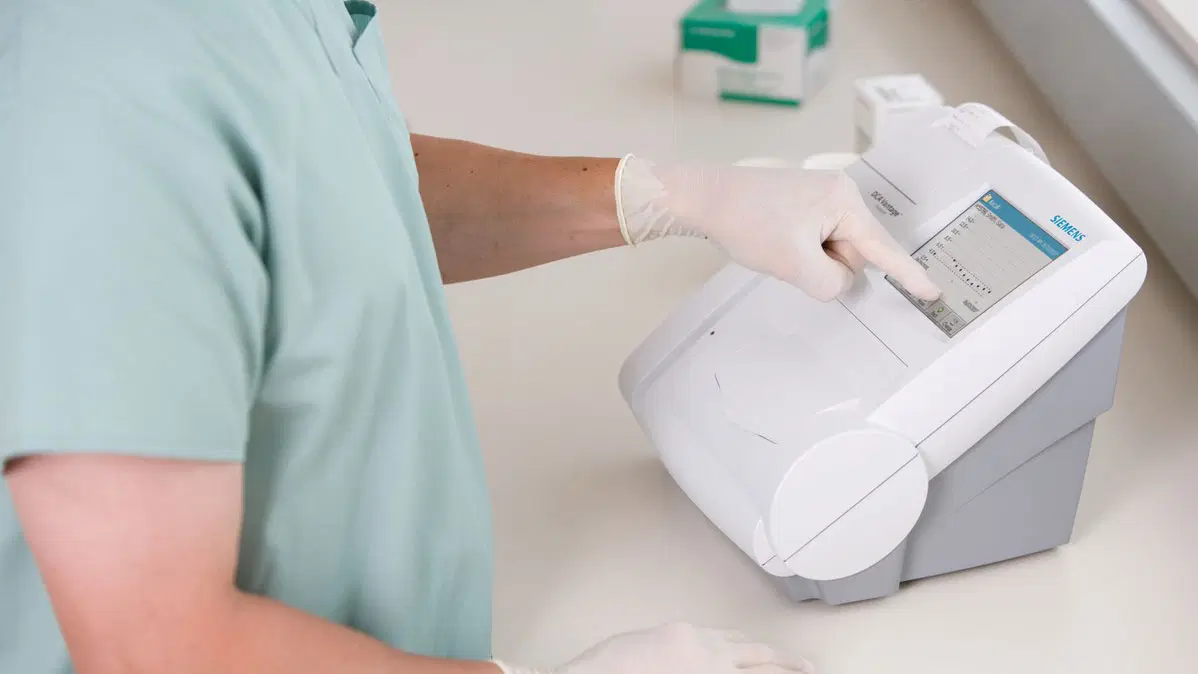
Point of Care Test(POCT)s are already used widely in many of our member services for chronic disease (HbA1c, ACR) and infectious disease including respiratory (COVID 19, influneza, RSV) and sexually transmitted infections (chlamydia, gonorrhoea, syphilis). Other POCT for Blood Borne viruses such as Hep C and HIV are also available and these and other POCT e.g. Strep A are likely to becomeeven more accessible and available in primary care settings.  

If you are currently using POCT as part of your service delivery including billing Medicare items for these tests, it is important to ensure your accreditation is current and in line with RACGP Point of care Standards. This isespecially important if you do not participate in the the QAAMS program and are billing point-of-care testing items 73812 and 73826, You will find the RACGP Point of Care Accreditation Standards here.  

If you have any further questions regarding this, please get in touch with Publichealth@ahmrc.org.au