Our People to Live Stronger & Longer

Point of Care Accreditation

Point of Care Test(POCT)s are already used widely in many of our member services for chronic disease (HbA1c, ACR) and infectious disease including respiratory (COVID 19, influneza, RSV) and sexually transmitted infections (chlamydia, gonorrhoea, syphilis). Other POCT for Blood Borne viruses such as Hep C and HIV are also available and these and other POCT e.g. Strep A are likely to becomeeven more accessible and available in primary care settings.  

If you are currently using POCT as part of your service delivery including billing Medicare items for these tests, it is important to ensure your accreditation is current and in line with RACGP Point of care Standards. This isespecially important if you do not participate in the the QAAMS program and are billing point-of-care testing items 73812 and 73826, You will find the RACGP Point of Care Accreditation Standards here 

If you have any further questions regarding this, please get in touch with Publichealth@ahmrc.org.au 

Public Health Site Visits

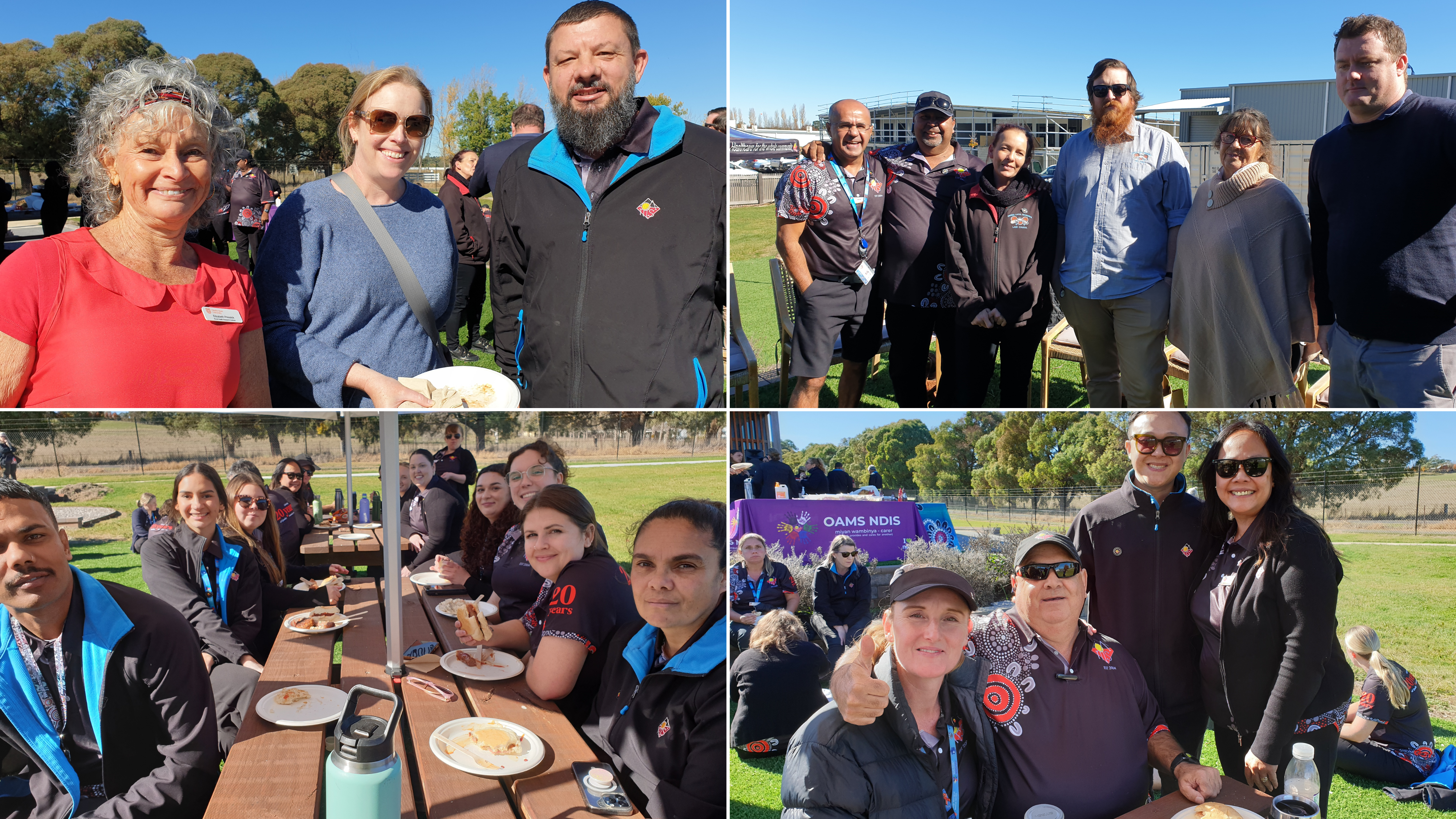
It was wonderful to catch up with many of you at the AH&MRC CQI Forum last week. 

If you saw our presentation you’ll know that we’re keen to visit our member services. We’ve found this the best way to know how we can support you! It provides an opportunity for us to deliver education and training, discuss your programs and service delivery and provide collaborative input if requested. 

Dr Kath and Kodie had previously visited the AWAHS Glenroy Clinic to provide Sexual Health education and support for all the team involved in providing clinical services. 

The visit started with a tour of the facilities and an overview of the service. The clinical staff provided insight into their sexual health program and then held an open discussion on workflow, capacity, barriers and enablers to the program. The afternoon involved an education session for a variety of clinical staff with GPs, nurses, Aboriginal Health Practitioners and program staff from SEWB, youth support, midwifery and outreach. 

The following morning at the all staff meeting Dr Kath gave an overview of the work that the AH&MRC is involved in. The clinical Yarn Up followed this meeting, where an additional 6 GPs attended and a summary and key take away points were discussed. 

We look forward to catching up with the AWAHS team in the future and the continued success of their sexual health and other programs. 

If you would like Public Health to visit your service, please reach out to our team at Publichealth@ahmrc.org.au  

Food Security

Ensuring food security stands as a key objective in closing the gap & enhancing the health and welfare of our communities. AH&MRC actively engages in Food Security Strategy Workgroups at both state and national levels and the commencement of Nicki Turner who was an author of Evidence Check for improving food security in Aboriginal communities in NSW has strengthened our capacity to contribute. But it is your voices that we are eager to hear to make sure we are providing genuine community representation. 

As our member services are part of the community, we want to connect with you to understand any challenges being faced accessing food in your community  and put forward your ideas to address these challenges.  We are interested in learning about existing programs and strategies in your local area, such as the “Food and Water for Life” initiative by the Dhariwaa Elders Group and Walgett Aboriginal Medical Service, a community-driven effort for sustainable food and water security. 

The knowledge you share regarding food security issues and/or successful food security programs will be used to guide our contributions to state and national level discussions to support food security for all our communities in NSW. 

Please reach out to our team via email publichealth@ahmrc.org.au to share your insights and help us to support your work strengthening the health and well-being of your community. 

Lyclear Shortages

There is a shortage of Lyclear (Permethrin 5% cream) around Australia. Limited stock will be available at wholesalers until the end of May 2024 and expected to resolve in July 2024.  

Reach Pharmaceuticals has received approval under Section 19A (S19A) of the Therapeutic Goods Act to import supply of permethrin (Encube) 5% cream from the USA until 31 October 2024 see this LINK. The S19A alternative is identical in active ingredient, strength and storage conditions to the Australian registered products but differs in tube size and additives.  

Below are options to order the product as follows: 

Cost is: PERMETHRIN – permethrin cream 5% 60g w/w cream (Encube) 

S19A price is $45 ex-GST Expiry is 31/10/2026 or whatever is available at the time of order receipt 

Alternative treatments….  

NACCHO recommends consulting references such as Therapeutic Guidelines and the National Healthy Skin Guideline 2nd edition for alternate treatments. These references suggest Ivermectin can be used first line for scabies in most patient groups, on PBS. “Oral ivermectin 200micrograms/kg for children over the age of 5 years (or over 15kg) and for non-pregnant/non-breastfeeding adults. Repeat the dose in 7 days.”  

See page 59: https://infectiousdiseases.telethonkids.org.au/resources/skin-guidelines/  

Benzyl benzoate (Benzemul) it is a second line treatment because it can potentially cause skin reactions. It is also in shortage.  


Towards the Elimination of Congenital Syphilis in Australia

On the 15th May ASHM convened a national roundtable to address Australia’s syphilis epidemic and rising numbers of congenital syphilis which is having an impact in NSW.  Dr Kath and Kodie from our Public Health Team attended virtually and heard from government, community, research and healthcare representatives from across Australia. It was great to see presentations from our member service Waminda showcasing their delivery of culturally safe antenatal services and their Birthing on Country program. 

The major take home message from this event was the importance of screening for syphilis to avoid the avoidable and tragic outcome of congenital syphilis. A blood test for syphilis should always be included in an STI screen of our patients this will help us to stop any more cases of congenital syphilis occurring in NSW.  

The AH&MRC is committed to the elimination of Congenital Syphilis in Australia as a priority for Aboriginal communities across NSW. The AH&MRC will continue to upskill the Aboriginal STI/BBV workforce and support the NSW Aboriginal Community Controlled Health Sector to provide holistic, integrated and culturally safe primary health care, as a key preventative mechanism of congenital syphilis. We will continue our efforts to progress commitments made under the National Agreement on Closing the Gap and strengthen healthcare systems to facilitate early detection and prompt treatment of syphilis infections. The AH&MRC will advocate for increased access to affordable and culturally safe services for Aboriginal people, particularly where syphilis rates may be disproportionately high. 

Clinical staff can access ASHM’s syphilis training and clinical resources using the Syphilis Learning Hub HERE.

Delegates of the ASHM Congenital Syphilis in Australia Roundtable


Be prepared and get vaccinated this winter

The cooler months are upon us and we want to ensure that messaging for Respiratory Infections including influenza, COVID and RSV remains our focus.  

All family members from 6 months and over are eligible for the annual influenza vaccine. Visit our previous article on what to expect for the 2024 influenza season for more information. 

COVID still remains a threat with increasing notifications and presentations to Emergency Departments across NSW in recent weeks. Our elders and adults with chronic medical conditions are particularly at risk of severe illness and can be protected by staying up to date with COVID vaccination. To assist with clinical decision making, you can find useful resources here.

The NSW Health 2024 Respiratory Illness Campaign Communications Toolkit seeks to promote flu vaccination to everyone in the NSW community (aged 6 months and over) by emphasising the benefits and ease of getting vaccinated, while also raising awareness and understanding of other respiratory illnesses including COVID-19 and RSV. The toolkit contains key messages, newsletter copy, media releases, factsheets, social media tiles and videos, digital and printed materials. It includes tailored assets for Aboriginal communities.

And for our babies born after 31st October 2023 there is a new RSV immunisation called Beyfortus™ (nirsevimab) to help stop severe bronchiolitis and pneumonia in babies under 12 months. This immunisation can be given at the hospital before newborns go home or at your ACCHO and should be recorded in the Australian Immunisation Register (AIR); ordering is through normal vaccination ordering systems. More information is available via this LINK.

We have a variety of resources to assist community messaging on respiratory infections on our website here. If you would like hard copies, please contact Publichealth@ahmrc.org.au and we will arrange for delivery to your service. 

For our members who submitted an EOI for the 2024 Winter Immunisation Grant, you should have received an email entailing the steps to receive your grant money. If you have completed these steps, you will shortly be receiving these funds. 

We know these grants will support the amazing effort your services make in protecting your communities. If you have any feedback or photos of your influenza vaccination programs please feel free to share with us at Publichealth@ahmrc.org.au so we can feature in our future Public Health Newsletters.  


AH&MRC Awards Winners

The winners and grinners from the AH&MRC Awards Night last Wednesday! Special shout out to mob who couldn’t be there.

– Emerging Talent Award – Callum Mokaraka (from Weigelli Centre Aboriginal Corporation)
– Digital Innovation Award – Tamworth Aboriginal Medical Service
– Staff Member of the Year Award – Donna Bliss (from Yoorana Gunya Family Healing Centre)
– Quality Team of the Year Award – Weigelli Centre Aboriginal Corporation
– Quality Organisation of the Year Award – Orange Aboriginal Medical Service (OAMS)
– Sustainability Impact Award – Riverina Medical & Dental Aboriginal Corporation
– Outstanding Contribution to Quality Management Practice Award in Admin – Werin Aboriginal Medical Service
– Outstanding Contribution to Quality Management Practice Award in Data – Waminda South Coast Women’s Health and Welfare Aboriginal Coorporation
– Outstanding Contribution to Quality Management Practice Award in Clinics – Bourke Aboriginal Corporation Health Service
– Outstanding Contribution to Quality Management Practice Award in Programs – Mental Health Camps: Tobwabba Aboriginal Medical Service

National Aboriginal and Torres Strait Islander Children’s Day

We are so excited to announce this year’s National Aboriginal and Torres Strait Islander Children’s Day Ambassador – Shelley Ware! 

Shelley is a proud Yankunytjatjara and Wirangu woman from Tarntanya/Adelaide, South Australia, and is well known as part of the ground-breaking NITV football programs Marngrook and The Point. For the past decade or so, Shelley has worked in the media as a radio, podcast, print and television presenter on both local and national AFL football news shows.

Shelley is a teacher, curriculum resource writer and education consultant who supports teachers and students in embedding First Nations culture and history into their everyday curriculum.

Graduate Certificate in Indigenous Trauma Recovery Practice

Improving health outcomes for Indigenous communities is one of the biggest challenges facing Australia today. The Graduate Certificate in Indigenous Trauma Recovery Practice is a unique program that is designed, developed and delivered by Aboriginal health delivery experts and academics in collaboration with local Aboriginal Elders.

It is a multidisciplinary program, utilising trauma-informed principles to train graduates to apply empathy, critical thinking and collaborative practices when working with children, families, and communities who have experienced trauma. Most importantly, this course focuses on applying Indigenous social and emotional wellbeing principles, practices, and healing frameworks to address the impacts of racism, trauma, and other factors that can have major health implications for Indigenous Australians.

Read the full flyer here.

Movember’s Indigenous Mens Health Grant

Movember wants to fund Indigenous organisations to design and deliver community-owned and led strategies with the power to improve the social and emotional wellbeing (SEWB) of their men and boys.

To help make it happen, we’ve created Movember’s Indigenous Men’s Health: A Community Empowerment Initiative. It offers grants up to AUD $700,000 per year for five years.

Awarded grants must support Indigenous communities to identify and deliver strategies that will improve the SEWB of their men and boys. Community-led thinking is what we’re after, along with building our own understanding of which strategies work.

If your Indigenous-led organisation – or one that you know – is ready to improve the SEWB of the community it serves, we want to hear from you.

Apply before expressions of interest close on 31 May 2024, 5pm PDT, or forward this email now to a partner group or organisation you know who can make an impact on Indigenous SEWB.