Our People to Live Stronger & Longer

Government announces $2 billion dollars for ongoing COVID-19 health response

Last week, the Morrison Government announced an additional $2 billion to extend the COVID-19 health response until 31 March 2021. The additional funding increases the Government’s COVID-19 health response to more than $16.5 billion since March 2020.

The extra funding covers Medicare-subsidised telehealth and pathology services, GP-led respiratory clinics, home medicines delivery, extended public and private hospital services, as well as further investments in Personal Protective Equipment (PPE) across Australia.

The AH&MRC supports the additional funds towards a national stockpile of PPE, as PPE shortage has been an ongoing challenge for many Aboriginal Community Controlled Health Services.

Medicare-subsidised pathology and testing at the point of care will continue in 86 rural and remote Aboriginal and Torres Strait Islander Communities across Australia.

“It is reassuring to see subsided COVID-19 testing and pathology remain for Aboriginal Communities. This helps remove barriers that may prevent Aboriginal people from getting tested, ensures early detection and minimises the risk of a possible outbreak in our Communities,” said Robert Skeen, AH&MRC CEO.

Some of the other health response initiatives include the National Coronavirus Helpline and Health Direct Website and home delivery services to support people in isolation and limit Community transmission of COVID-19.

“We are pleased to see the considered measures to offer ongoing support for Aboriginal people to stay safe in New South Wales (NSW) and across Australia,” said Robert Skeen.

It is great that the Government has telehealth because it has enabled people in our regional Communities to continue to access care for chronic health conditions,” said Robert Skeen.

“As COVID-19 cases continue to occur across Australia, the AH&MRC remains committed to supporting our 47 Member Services to protect the health and wellbeing of Aboriginal Communities in NSW,” said Robert Skeen.

“The additional funding will strengthen Australia’s health response to COVID-19, help prevent the spread and encourage testing for the months to come,” said Robert Skeen.

Deadly Tips On What To Do If Someone Replies That They R NOT OK?

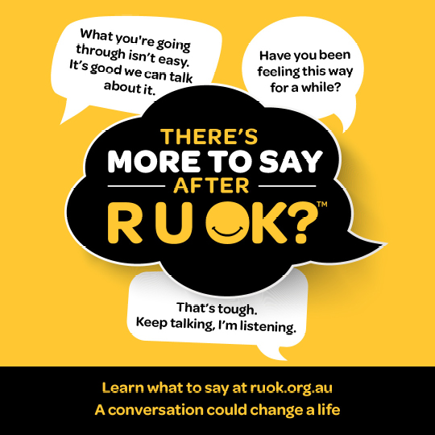
The 10th of September is R U OK? Day. A day where we are encouraged to reach out to friends, family, work colleagues and ask them a simple question – R U OK?  It can be hard to ask the question especially if you have not planned what to say next.

Tip 1: Have a yarn

Talk to them about why they are not ok. Try not to worry about saying or doing the wrong thing. The most important thing is showing up and listening to what they have to say without judgement. See whether you can identify why they are having a bad day. Maybe they had a fight with a friend or family member, or maybe they haven’t been feeling ok for a while. If they have experienced a low mood for a period longer than two weeks, encourage them to call their local AMS or the Mental Health Line (1800 011 411). These services can help connect them with a bulk-billed psychologist, social worker or mental health worker in their local area.

Tip 2: Connect them with other people

It’s been difficult to connect to Country during COVID-19. For some, this has created feelings of loneliness and isolation from Community. Think of other ways to help them connect to their Community and Culture in COVID era. Suggest linking the person up with an Elder or person in the Community who has experienced similar issues and can provide guidance. Encourage them to attend a support group with people experiencing similar issues. Many of these groups have moved online and are easily accessible during COVID-19. Call your local AMS to see whether they are running any support groups or SEWB programs at the moment.

Tip 3: Find out what they enjoy

While COVID-19 has had many negative effects on mental health; job loss, isolation, loneliness and anxiety; many good things have come from it as well.  COVID-19 has freed up time, usually spent on socialising and activities, for people to do refocus on passion projects, or things that they enjoy. People are using this time to start a creative project e.g. cultural art or music therapy, rediscover an old hobby or start a new one. Ask them if there’s an activity or hobby they would like to start or resume. It could be something with cultural roots like traditional painting or connecting to land through time outside in nature. If they are reluctant to make a start, offer to join in so that they feel comfortable and supported while they build up their confidence.

Tip 4: Share the burden

Finally, remind them they are not alone in this. If you can, offer your support in things that they might find difficult right now like grocery shopping, cooking, cleaning etc. If you can, offer to be there as a support buddy to contact when they’re struggling. If you are feeling stretched right now or you are struggling with your own mental health, see if one of your other friends or family members can have a yarn, or lend a hand. If their issues are out of your depth, for example, traumatic events, substance abuse and depression encourage them to reach out to their local AMS for a referral to see a Social and Emotional Wellbeing Worker (SEWB), AOD Worker or Mental Health Nurse or counsellor. If your friend or family member mentions self-harm or suicidal thoughts, encourage them to call the NSW Mental Health line on 1800 011 511.


Sometimes we get so busy in our lives that we forget to check in with the people most important to us to see if they are ok. That first conversation can be difficult, but it can change a life. For more information on R U OK? Day, visit the R U OK? Day website.

Windsurfing Adventure Raises $26,000 for Aboriginal Community Controlled Health Sector

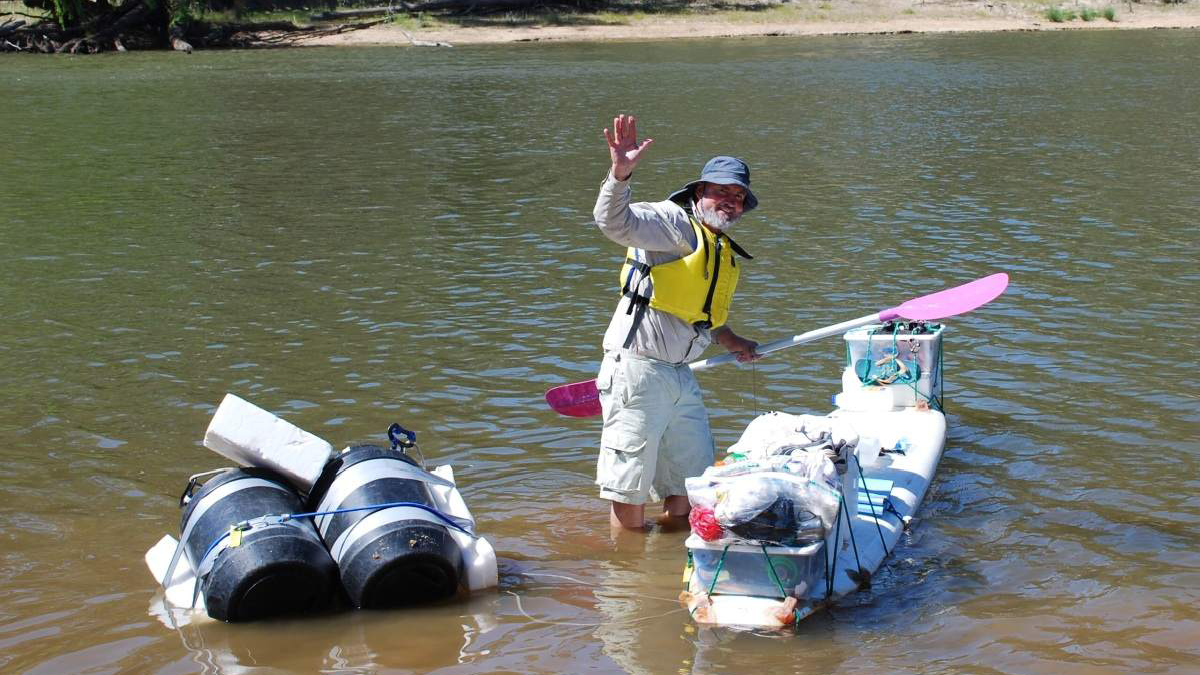
Rod McEwin has a passion for windsurfing, the Murray River and playing his part to help improve the health outcomes of Aboriginal people in NSW.

In 2006, Rod set sail on a windsurfing adventure down the Murray River. Visiting the River, a week or so each year, he has ridden more than 1,800 kilometres and raised more than $26,000 for the Aboriginal Community-Controlled Health sector. The adventure started when Rod received a call from a friend who made windsurfing boards.

“He rang to say he had a second-hand board for sale. My sister kindly agreed to buy the board with me. I am still not sure if I own the front half or back half. Luckily for me, she lets me use both halves!”

Rod was fascinated with the Murray River as a boy. He and his friends spent endless summer holidays on the river. “We would swim, water-ski, muck around in a dinghy, sail in a tiny yacht, fish and put out pots for yabbies. Sometimes, we would catch enough yabbies to feed several families,” said Rod.

Ready for a challenge, Rod and the first of several friend and family land crews, embarked on his adventure down the Murray River. The board was sailed, paddled, carried, dragged or whatever else it took to get it down the river with only human effort, the wind and current of the river. The team camped near the banks of the river and spent time amongst the river birds, native animals, and remarkable scenery. Rod encouraged people he met to donate to Aboriginal Health & Medical Research Council (AH&MRC) and show their support for the ACCHS sector.

“It has been an amazing ride, and I am grateful for the endless support from my family and the generous land crews. For me, the trip has been much more than a sporting adventure. I have met incredible people and raised awareness for an important cause. My family has worked for this not-for-profit organisation, and I feel proud to have helped people realise that we can do more to close the health and life expectancy gap between Indigenous and non-Indigenous Australians, and we can do this together.” Donate to the AH&MRC today.

“It’s fantastic to see such drive from one person, to raise money for our sector. Rod’s fundraising efforts have put the AH&MRC ‘on the map’ and supported us to deliver important health programs through our Aboriginal Medical Services in NSW to Aboriginal Communities. We sincerely thank Rod for his ongoing support and dedication. I hope others feel inspired by his story to get involved,” said Robert Skeen, AH&MRC CEO.


If you would like to share your fundraising story with the AH&MRC please email the Communications Team today: Comms@ahmrc.org.au

Support for National Agreement on Closing the Gap

AH&MRC welcomes the new National Agreement on Closing the Gap as a historic shift to improve Aboriginal and Torres Strait Islander peoples’ life outcomes.

The National Agreement signals a turning point in the relationship between Aboriginal and Torres Strait Islander people and governments – one that is based on shared decision making on policies and programs that impact Aboriginal and Torres Strait Islander peoples’ lives and futures.

Aboriginal Health & Medical Research Council (AH&MRC) came together with more than fifty other Aboriginal and Torres Strait Islander community controlled peak bodies (Coalition of Peaks) to represent our Member Services and Communities because governments had failed to make substantial progress on Closing the Gap.

The voices of the more than 4000 Aboriginal and Torres Strait Islander people participated in engagements on what should be included in the new National Agreement. The Coalition of Peaks collectively showed that Aboriginal and Torres Strait Islander people had a direct say in what was important to them.

The new National Agreement is a commitment from all governments to change the way they work with Aboriginal and Torres Strait Islander Communities and organisations through four Priority Reforms areas which broadly include:

  1. Share decision making and new partnerships with Aboriginal and Torres Strait Islander Communities across Australia
  2. Strengthening the Community Controlled Sector to deliver close the gap services
  3. Improving mainstream government institutions to address structural racism
  4. Aboriginal and Torres Strait Islander people have access to and capability to use local data to monitor close the gap efforts and drive their own programs and policies

“Until now the Closing the Gap was just about governments. We needed to have ownership of it and be an equal part of the decision-making process. This is one of the major changes in the new Agreement on Closing the Gap. Australian governments will work in a formal partnership with Aboriginal and Torres Strait Islander representatives through the Coalition of Peaks,” said Robert Skeen, AH&RMC CEO.

“I am pleased to see a focus on strengthening the Aboriginal and Torres Strait Islander Community-Controlled Sector as a priority area. We want to support our sector, create new jobs for Aboriginal and Torres Strait Islander people, and bring opportunities for our healthcare workers to develop their own programs as they continue to provide culturally safe healthcare services, with better health outcomes for our Communities,” said Robert Skeen, AH&MRC CEO

There is a big difference from what governments alone were prepared to commit to in December 2018 and where we are now. The Coalition of Peaks, with the collective support of our Communities and organisations have worked hard to push governments.

The National Agreement does not include everything that the Coalition of Peaks wanted, nor everything that Aboriginal and Torres Strait Islander people have said is needed to improve their lives but Governments were pushed because the Coalition of Peaks have been at the negotiating table.

The National Agreement establishes 16 national socio-economic targets in areas including early childhood, education, employment and health.

“I am disappointed there is no set target that focuses on reducing violence against women and children. We will continue to advocate for governments to do better. I am pleased to see targets on new areas previously excluded in Closing the Gap strategy, including a target to reduce suicides of Aboriginal and Torres Strait Islander people towards zero,” said Robert Skeen.

There is still a long way to go and a lot of work to be done to achieve equality in health and life expectancy for Aboriginal and Torres Strait Islander people. We will continue to work hard to overcome the gaps and ensure our people can have bright and healthy futures.

The National Agreement and the work of the Coalition of Peaks complements the efforts led by First Nations people across the country to improve the life outcomes of our people, including the implementation of the Uluru Statement of the Heart through a constitutionally enshrined Voice to Parliament. This is one part of a much bigger picture for our people. We know there is more to be done, and we will keep pushing.

To read the full new National Agreement on Closing the Gap, please visit the Coalition of Peaks website: https://coalitionofpeaks.org.au/new-national-agreement-on-closing-the-gap/

END

For more information and media enquiries

  • AH&MRC: Nadia Ruben on 0418 415 938 or nruben@ahmrc.org.au; and Lucy Butler at lbutler@ahmrc.org.au
  • Coalition of Peaks: Jo Scard on 0457 725 953 or jo@fiftyacres.com; and Julia Macerola on 0422 337 332 or julia@fiftyacres.com

About the Coalition of Peaks

The Coalition of Peaks is a representative body of around fifty Aboriginal and Torres Strait Islander community controlled peak organisations and members. The Coalition of Peaks came together on their own as an act of self-determination to be formal partners with Australian governments on Closing the Gap. Members are either national, state or territory wide Aboriginal and Torres Strait Islander community controlled peak bodies including certain independent statutory authorities. Their governing boards are elected by Aboriginal and Torres Strait Islander communities and / or organisations.

For more information on the Coalition of Peaks and to sign up to their mailing list, go to: www.coalitionofpeaks.org.au
SMART Recovery Training Q&A

What is your position at Armajun Aboriginal Health Service?

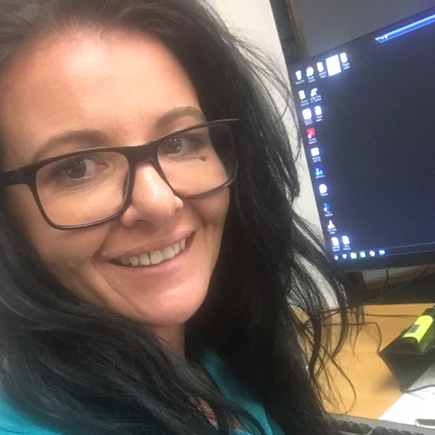
My name is Natasha Hunt and I am a Social and Emotional Wellbeing and Drug and Alcohol Caseworker at Armajun Aboriginal Health Service in Inverell.

Why did you choose to do SMART Recovery Training?

I chose SMART Recovery Training to upskill myself in my positions and to aid my confidence in holding positive conversations with my clients to better support their needs through the recovery and healing process.

What is your feedback on the SMART Recovery Training?

The SMART Recovery Training has been very clear and concise. It has left me with no questions unanswered and no need for further explanation on any topic within the training.

What knowledge and skills have you gained through the Smart Recovery Group Facilitator Training?

I believe after finishing SMART Training Phase 1 I have gained knowledge, skills and tools to confidently become a SMART Recovery Group Facilitator (on completion of phase 2). I have gained confidence from the training and it has given me the necessary skills to initiate and guide positive and constructive conversations with my clients to aid self-management with their recovery and healing process.

What have been the benefits of doing the SMART Recovery Training?

The benefits of doing the SMART Recovery Training are evident in the confidence I have gained in assisting clients in their recovery and healing journey. Through the SMART Recovery Training I will be able to provide guidance for clients on how to determine and set realistic and achievable goals, as well as focus on practical solutions in the ‘here and now’.

How will you utilise the skills you have obtained through undertaking the training?

I will utilise the skills I have gained from undertaking the SMART Recovery Training phase 1, with almost every client who I support in both my roles as Social & Emotional Wellbeing and Drug & Alcohol Caseworker. The skills I have obtained will help to keep my support focused and will assist me in helping clients self-manage their journey through recovery as each client’s situation is unique. Using these skills, I will be able to provide a safe space and a holistic approach to healing.

I have gained valuable skills in applying Cognitive Behaviour Therapy (CBT) strategies to assist clients in gaining greater control over their thoughts, feelings and behaviours. Learning about motivational interviewing has given me an understanding of how to support clients in building and maintaining motivation, cope with urges and cravings and problem solve using CBT techniques including facilitating healthy non-judgmental conversations on how to attain a healthy lifestyle balance.

Would you recommend the SMART Recovery Training to others?

Overall, I have been very satisfied with the SMART Recovery Training. It has been a very pleasant learning experience. I score the online SMART Recovery Training 10/10 and highly recommend!


To find out more about SMART Recovery Training and how AH&MRC can assist you to complete this training please contact SQuayle@ahmrc.org.au

Trauma Informed Practice Online Workshops

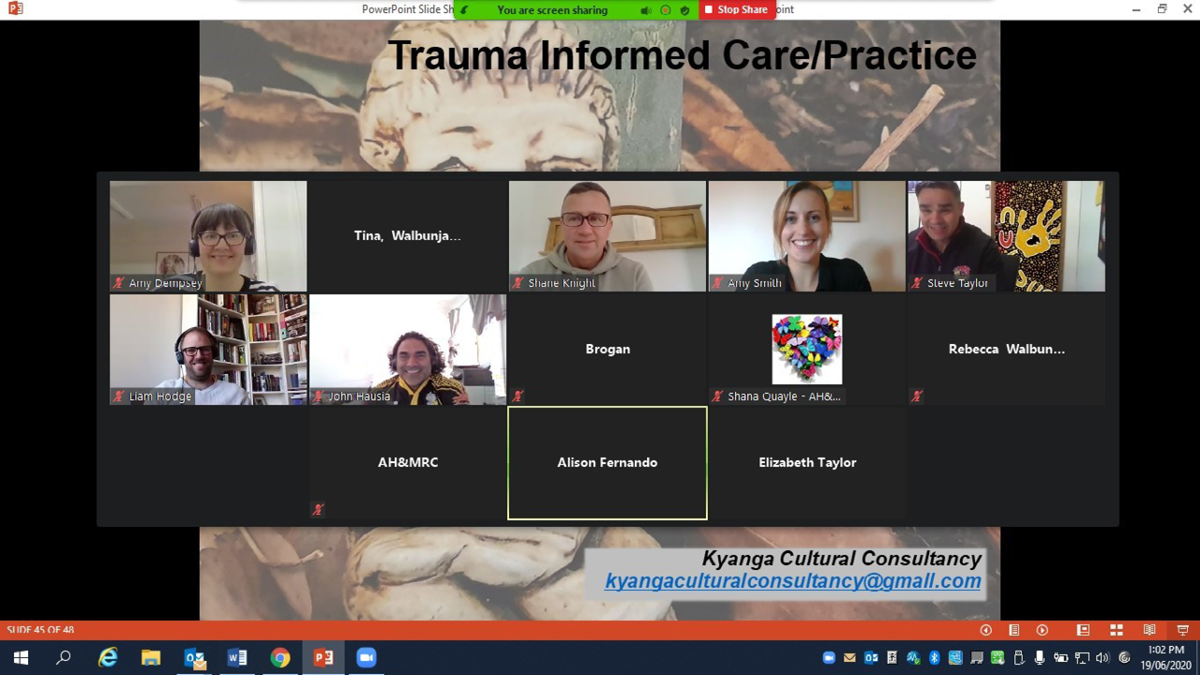
In collaboration with Kyanga Cultural Consultancy (KCC) we delivered 4 online workshops on the topic of Trauma-Informed Practice in June. The workshops were highly successful with a high turnout rate and an engaged audience across the board.

KCC ensured that the content of the workshop was appropriate for an online format, as Trauma-Informed Practice can be a confronting and sensitive topic.

Initially, the workshops were going to be delivered back to back with the SEWB and AOD Forums that had been planned, but due to current COVID-19 circumstances were not able to deliver on this expectation.

Trauma affects us all, directly, or indirectly. Many people live with the ongoing effects of past and present overwhelming stress (trauma). Despite the large number of people affected, many of us don’t think of the possibility that someone we meet, speak to or support may have experienced trauma. This makes us less likely to recognise trauma in others. Keeping the possibility of trauma on our radar means keeping the sensitivities and vulnerabilities of people who may be trauma survivors in mind. It means being respectful, understanding and acknowledging the experiences of others.

The Trauma-Informed Practice Workshop provided participants with an overview of what Trauma-Informed Practice is and a safe space to explore what communication tools can benefit this practice. Topics covered considered the core principals of trauma-informed practice, and a strength-based approach for those working with Aboriginal people affected by trauma. The workshop encouraged participants to look at how they are currently working, and how they could improve their trauma-informed practice to strengthen their workplaces response to trauma.

We would like to thank all the ACCHS staff members who attended and the KCC for such informative and engaging sessions. We look forward to working together in the future.

Authors – AH&MRC Practice Support Team

Public Health Alert: COVID-19 cases linked to the Crossroads Hotel in Casula, Sydney NSW

NSW Health have confirmed 13 new COVID-19 cases linked to the Crossroads Hotel located in Casula, a suburb in Sydney’s South West region. There are significant concerns that these cases  increase the risk of Community transmission in NSW and we must continue to take the right steps to slow the spread, and keep our Communities safe.

AH&MRC’s CEO, Robert Skeen: “Following the advice of NSW Health, AH&MRC urges anyone who has visited the Crossroads Hotel, including staff and patrons between Friday 3rd to Friday 10th July to self-isolate for 14 days from the day they last visited and have a COVID-19 test as soon as possible.” A full list of COVID-19 testing clinics is available here.

Visitors to the Crossroads Hotel who feel unwell with flu-like symptoms such as a fever, cough, sore throat, runny nose or shortness of breath must immediately have a COVID-19 test and should follow the advice from their healthcare professional.

Some people can be infected with COVID-19 and show no symptoms. NSW Health urges anyone who visited the Crossroads Hotel to go to their nearest COVID-19 testing location to be tested, even if they do not have any symptoms of illness.

It is important to note that even with a negative COVID-19 test result, the 14-day self-isolation period must be completed. This is because people with COVID-19 may develop symptoms up to 14 days after they have been in contact to a person with COVID-19 and a recent negative test will not identify a person who may develop the illness later.

AH&MRC’S CEO, Robert Skeen: “Self-isolation is an important measure to help slow the spread of COVID-19 in our Community and reduce the possibility of spreading the virus to Elders, family members and friends, who may become severely unwell with COVID-19. We all have a part to play to keep our Communities safe, healthy and strong during this pandemic.”

AH&MRC encourages everyone to continue practicing good hygiene and social distancing measures including regularly washing your hands, covering your coughs and sneezes and continue to practice physical distancing by keeping 1.5 metres apart from other people and avoid large gatherings. There can be a maximum of only 20 visitors to your home at any one time, and no more than 20 people can gather outside in a public place. Retail businesses and restaurants must ensure that each person has 4 square metres of space and have a COVID-19 Safety Plan.

If you or anyone in your family is feeling unwell with flu-like symptoms stay home and arrange to get a COVID-19 test at your closest COVID-19 testing clinic. Please call your nearest Aboriginal Medical Service for more information, especially if you have any concerns about having recently attended the Crossroads Hotel during the 3 to 10 July.

You may also visit this NSW Health website for information about this incident at https://www.health.nsw.gov.au/news/Pages/20200713_00.aspx or you may wish to call the National Coronavirus Helpline on 1800 020 080, which is available 24 hours a day, seven days a week.

There’s never been a better time to quit: WNTD and beyond

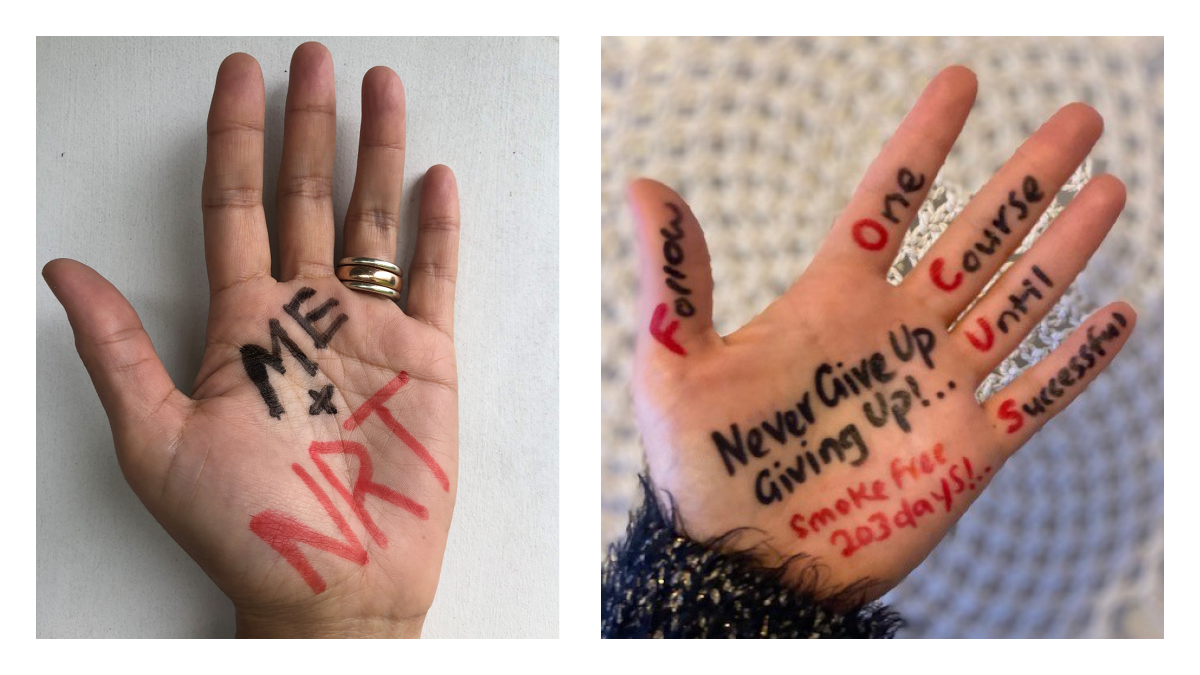
World No Tobacco Day (WNTD) is celebrated around the world on May 31st, and this year AH&MRC supported the day with a campaign to encourage our community that “It’s never been a better time to quit” through the social media campaign #BlakPledge with @KooriQuitline and @CancerInsituteNSW. We received lots of inspiring pledges from our team members and encouraged community members to send theirs in too. We caught up with some of our Member Services, Awabakal AMS and the South Coast Medical Service Aboriginal Corporation, to see how they are continuing to support their clients and communities to quit smoking beyond WNTD. Although WNTD is over for 2020, we can continue to help smoking cessation by checking in on friends and family who are quitting – it’s never too late to try. As the old saying goes, “The best time to plant a tree was 20 years ago; the second best time is today.”

Awabakal AMS TIS Program

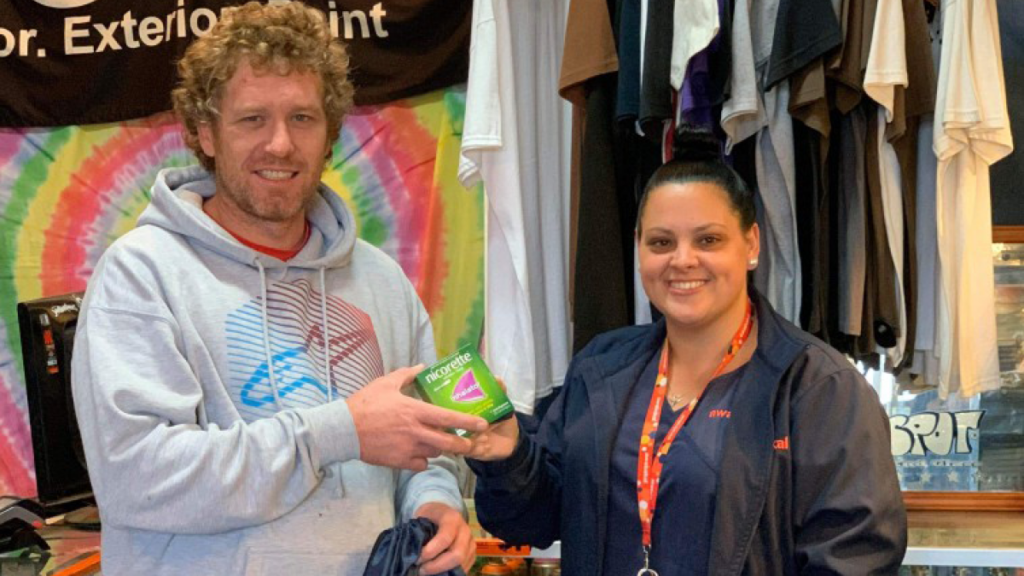
At Awabakal AMS, the Tackling Indigenous Smoking (TIS) Program continued during COVID-19 with the TIS team, GPs and clinic staff all embracing the opportunity to encourage people to start their quit journey during this time. Clinic drivers delivered Nicotine Replacement Therapy (NRT) when required and the TIS program also moved to online engagement and education during COVID-19. Smoking assessments were completed by GPs and AHPs, with the TIS team providing options and alternatives via telehealth. Community members also contacted Awabakal to seek assistance and access NRT products that are known to reduce nicotine cravings, which can aid the overall process of quitting.

SCMSAC TIS Team

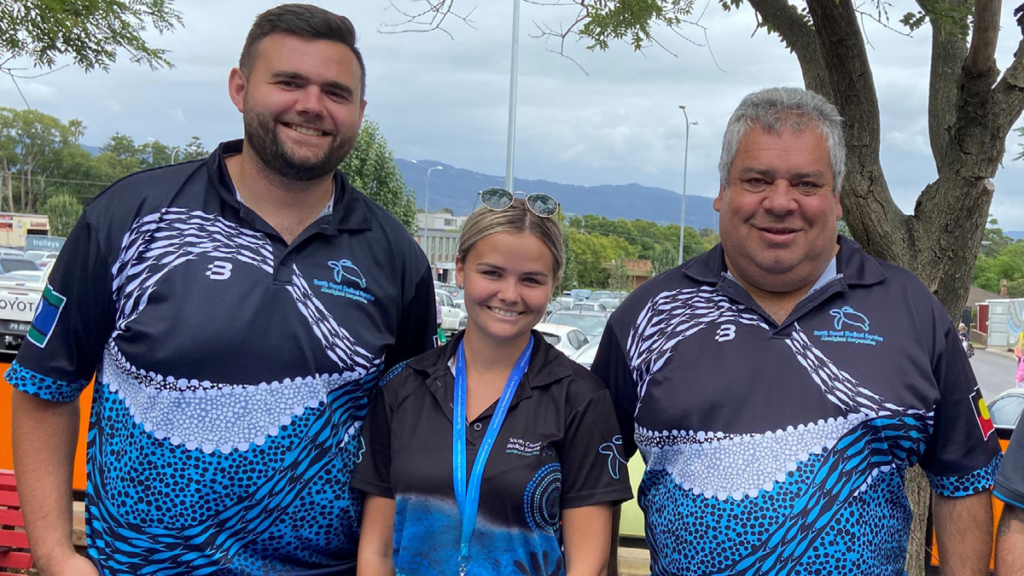
Meanwhile in another region of NSW, the TIS team at the South Coast Medical Service Aboriginal Corporation (SCMSAC) continue to raise awareness regarding the harms and risks of smoking in 13 Aboriginal Communities from Gerroa on the South Coast, to the Victorian border. The comprehensive program offers face to face counselling, support groups, follow up contacts, CO (carbon monoxide) readings, school education sessions, brief interventions, walking and exercise groups and free NRT. Community members attending clinics who aim to quit smoking can receive a voucher for two weeks’ supply of NRT, which can be redeemed at participating pharmacies. The TIS team also work hard to spread smoking cessation messages in their communities and provide feedback about their communities’ needs.

Q&A with Your Health Your Future Ambassadors Marlee and Keely Silva

Q: Why is Aboriginal health important to you and what made you want to become active in this space?

If this point in history has taught us anything, it’s that our health is absolutely vital. We know when we have healthy bodies and healthy minds, we have the power to not just survive, but thrive and achieve all our goals. Speaking about health and promoting ways for our mob to maintain it, is incredibly important to us because all our work is committed to our peoples’ prosperity and health is such a significant element of this.

Q: Why did you want to become an AH&MRC Your Health, Your Future Ambassador?

Since starting Tiddas 4 Tiddas (and being so pleasantly surprised with the enormous growth and support we’ve received) we’ve been looking for a way to connect to more mob on the ground and use our reach for good – this Ambassador opportunity so perfectly aligns with our values around strengths-based attitudes, holistic health and building a brighter future for our people. We’re so honoured and excited to be on board!

Q: What health topics are you most passionate about and why?

Keeping our communities free from smoking, promoting a healthy diet and exercise, mental health management and destigmatising the use of health services in general, we feel they are some of the most important health issues and topics we need to focus on as a community to protect our mob and see them live long and healthy lives.

Q: Just for a little fun, if you could invite anyone over for a yarn who would it be and why?

Keely: Michael Jordan, because of his work ethic, skill level and what I could learn from his commitment and success.

Marlee: Michelle Obama, because of her wisdom, kindness and what I could learn from her leadership.

Message update from NACCHO CEO Pat Turner on COVID-19 advice for Black Lives Matter protesters

“Mass gatherings where people are close together are high-risk for spreading COVID-19,” said Pat Turner, CEO of the National Aboriginal Community Controlled Health Organisation.

“It has been recognised that COVID-19 poses a serious risk to Aboriginal and Torres Strait Islander people due to higher levels of chronic conditions especially those aged 50 years and older.

“The specific advice of all health authorities is that while COVID-19 remains in Australia that everyone should take precautions including the social distancing and hygiene practices,” she said.

“People with coronavirus can spread the virus for at least 48 hours before showing symptoms. Those who attended the rally should take every precaution they can in terms of practical measures to protect themselves and their families.

“It is important you continue with social distancing, regular hand washing and cough hygiene. If you can, avoid contact with Elders and with people with chronic medical conditions as these people are at much higher risk of serious COVID-19 illness if they get infected. If you develop even the mildest of symptoms, stay home and get a COVID-19 test. The symptoms that warrant a COVID-19 test include a sore throat, cough, shortness of breath, chills, night sweats or a temperature over 37.5°C.

“As per government’s health advice, people who marched don’t need to isolate unless they felt sick, in which case, they should get tested. The earlier we pick up infections, the quicker we can move to prevent further spread.”

NACCHO is the national peak body representing more than 140 Aboriginal Community Controlled Health Organisations (ACCHOs) across the country on Aboriginal health and wellbeing issues. NACCHO represents over 6,000 ACCHO staff – of which 3,500 are Indigenous – and is the largest employer of Aboriginal and Torres Strait Islander people in Australia.

ACCHOs have almost 50 years of experience in the delivery of comprehensive primary health care. Services are delivered through fixed, outreach and mobile clinics operating in urban, rural and remote settings across Australia.