






Our People to Live Stronger & Longer

Good Medicine Better Health – NACCHO eLearning

Good Medicine Better Health (GMBH) is a series of Continuing Professional Development (CPD)-accredited learning modules and consumer resources on a range of health topics.

These have been developed for Aboriginal and Torres Strait Islander Health Workers and Practitioners and their communities to improve quality use of medicines and medical tests.

Prior to closing down in December 2022, NPS MedicineWise had developed these modules and resources in collaboration with NACCHO and various other organisations within the Aboriginal and Torres Strait Islander health sector.

NACCHO will continue the GMBH program over the next two years with funding from the Department of Health and Aged Care under the Quality Use of Diagnostics, Therapeutics and Pathology Program (QUDTP).

Find out more here.

The Partnerships for Cancer Research

The Australian Government is bringing together Aboriginal and Torres Strait Islander organisations and the research sector to conduct innovative, First Nations-led cancer research through a new grant scheme and a $9.6 million investment.

The Partnerships for Cancer Research program will seek to improve cancer outcomes for Aboriginal and Torres Strait Islander people by generating knowledge that informs inclusive and equitable cancer care while also building the capacity of the First Nations cancer research sector.

Delivered by Cancer Australia in collaboration with the National Health and Medical Research Council (NHMRC), up to 12 community-based grants between $800,000 to $2.5 million will be awarded for projects up to three years. The program will fund translational, community-based cancer research projects across three areas – prevention and early detection, access to cancer care, and patient experiences and outcomes from diagnosis through to survivorship.

The grant funding is designed to support the establishment of new partnerships but also to strengthen existing collaborations between organisations committed to improving cancer care for Aboriginal and Torres Strait Islander peoples now and into the future.

Outcomes of these partnerships will include:

  1. improved health and wellbeing of Aboriginal and Torres Strait Islander people by generating translational knowledge to inform equitable cancer care;
  2. building the research capacity and skills of the Aboriginal and Torres Strait Islander cancer workforce, including increasing research partnerships and collaborations;
  3. establishing governance arrangements that enable shared decision-making and increased involvement of communities in research co-design.

This investment is part of the Albanese Government’s commitment to delivering better outcomes for Aboriginal and Torres Strait Islander communities under the $238 million Improving First Nations Cancer Outcomes program announced by the Hon Mark Butler, Minister for Health and Aged Care in the 2023-24 Budget.

This program includes $38.6 million provided to Cancer Australia to invest in First Nations-led cancer research, build the capacity of the Aboriginal and Torres Strait Islander research sector and ensure mainstream cancer care services are culturally safe and accessible.

Applications are encouraged from partnerships that involve Aboriginal and Torres Strait Islander-led organisations collaborating with research groups and mainstream health services, working closely with communities.

Grant applications  are now open and will close on Wednesday, 12 February 2025.

For more information visit canceraustralia.gov.au.

Quotes attributable to Assistant Minister for Indigenous, Health Ged Kearney MP:

“Cancer affects all Australians, but we know that Aboriginal and Torres Strait Islander people often face worse outcomes. This program is about closing the gap by ensuring First Nations knowledge and voices are central to the research process and cancer care.

“As a nurse I know the importance of lived experience in health research. We’re including First Nations Australians and their unique lived experience to improve cancer outcomes and build the capacity of the First Nations cancer research sector.

“This grant opportunity presents a new and innovative approach to supporting cancer research in First Nations communities. I encourage interested organisations to seek out partners and make an application.”

Quote attributable to Adjunct Professor Jacinta Elston, Cancer Australia’s Advisor on Aboriginal and Torres Strait Islander Cancer Control:

“Through the Partnerships for Cancer Research grant program, we have a unique opportunity to transform cancer outcomes for Aboriginal and Torres Strait Islander communities. By investing in community-based research and strengthening partnerships between Aboriginal and Torres Strait Islander organisations and mainstream cancer services, this grant program will empower our people, honour our knowledge, and build capacity for generations to come. It represents a vital step towards achieving equity in health outcomes and closing the gap in cancer care for our communities.”

Source: https://www.health.gov.au/ministers/the-hon-ged-kearney-mp/media/the-australian-government-investing-in-first-nations-led-cancer-research

Anti-vaping Research with Aboriginal Youth and Community

Anti-vaping research with Aboriginal youth and community has been conducted via a collaborative partnership of Waminda, Pius X, Walgett AMS, Eleanor Duncan, Inside Policy (a 100% Aboriginal-owned and led agency), and the Cancer Institute NSW.

The purpose of the project was to increase a shared understanding of the knowledge, attitudes, and use of e-cigarettes (vapes) by Aboriginal young people 14 to 24 years of age, including activities and strategies that may reduce the uptake and encourage quitting among Aboriginal young people.

The community report provides the Key Findings and Considerations.

While the Considerations will involve a broad range of organisations, which the Cancer Institute NSW is working to disseminate, a priority is first to communicate the findings to all AH&MRC members to help inform any work being conducted to reduce vaping amongst young people in the community.

The results will be published by collaborating with interested ACCHOs and the Cancer Institute NSW to contribute to National and International First Nation’s research. Publication requires that results cannot be formally presented at conferences or published on any websites before a paper is published.

We encourage members to use the results to inform their work; however, we ask that the report is not placed on their website until after publication.

Service NSW Mobile Service Centres

Each week, Service NSW update their website to provide the most current schedule, including the dates Mobile Service Centres will be visiting different communities. This schedule is available up until December, allowing residents to plan ahead for our visits.

NSW Service Mobile Service Centres bring many of the same essential services found at their physical locations directly to your community, offering convenient access to a variety of government services, including:

  • Driver Licence Services: Applications and renewals for driver licences and photo cards.
  • Driver Knowledge Tests: Assistance with completing Driver Knowledge Tests for new drivers or those seeking a licence upgrade.
  • Working With Children Check: Applications for the Working With Children Check, ensuring compliance for those working with minors.
  • Hazard Perception Tests: The opportunity to take the Hazard Perception Test, a requirement for advancing from a learner licence.
  • Registry Services: Applications for birth, death, and marriage certificates to keep your personal documentation up to date.
  • Savings Finder Program: A service that helps you discover and access over 70 government rebates and vouchers, potentially saving money on services and utilities.

We strive to ensure that all communities have access to these critical services without the need to travel long distances to our fixed locations. Stay informed by checking our website regularly for the most up-to-date information on our mobile service schedule.

View the MSC Northern Schedule 

View the MSC Southern Schedule 

View the MSC Western Schedule

View the MSC Kangaroo Schedule

Find out more info here

Expressions of Interest for the NSW Health Aboriginal Heart Health Grants are now open

The NSW Health Office for Health and Medical Research is pleased to announce that Expressions of Interest for the Aboriginal Heart Health Grants are now open.  

This is a targeted call to fund high impact Aboriginal-led research that will improve the cardiovascular health of Aboriginal peoples in NSW.

All grants must be led by an Aboriginal Chief Investigator and applications are encouraged from Aboriginal Community Controlled Organisations, Aboriginal Medical Services, Aboriginal peak bodies, as well as local health districts, specialty health networks, other public health organisations, universities, medical research institutes and not-for-profit organisations.

An information webinar will be held on 16 October to support applications. Register here

Learn more about available grants, how to apply and register for the webinar.

Expressions of Interest close 13 December at 5pm AEDT.

We would greatly appreciate your support in sharing this opportunity with your networks.

Illawarra Aboriginal and Torres Strait Islander Business Expo

Businesses attending

Food and hospitality

IT

Marketing, media and graphic design

BreastScreen NSW mobile vans on tour

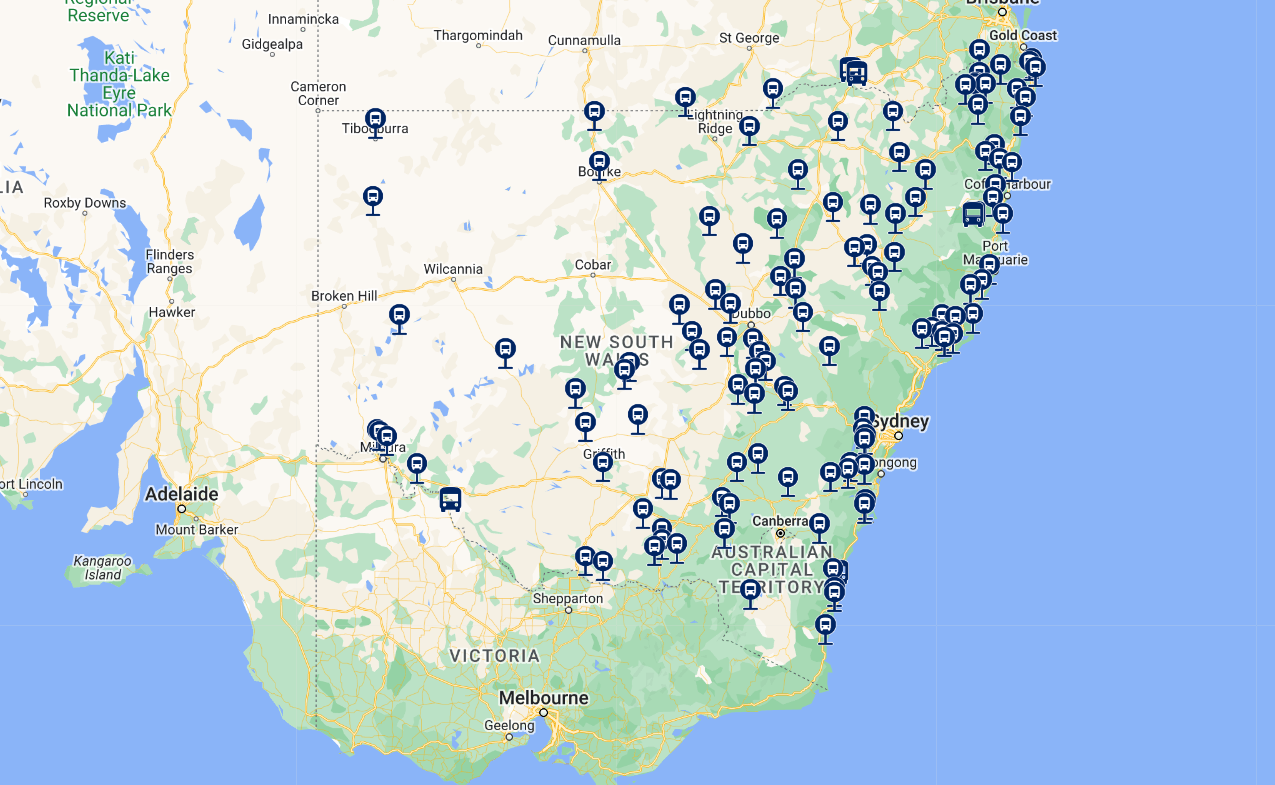
BreastScreen NSW mobile vans are visiting over 200 locations across NSW, bringing this important service to women in their communities. 🚌

Find out when a van is coming your way – visit the link here or call 13 20 50.

View the breast screening for Aboriginal women factsheet.

Make time to stay healthy poster.

Public Consultation: Updated Australian ACS Guideline Draft

Public consultation for the updated draft of the Australian clinical guideline for diagnosing and managing acute coronary syndromes (ACS) is now open!

 The National Heart Foundation of Australia and the Cardiac Society of Australia and New Zealand invite you to provide your feedback on the updated draft of the Australian clinical guideline for diagnosing and managing acute coronary syndromes (ACS). The guideline provides evidence-based recommendations for health professionals on screening, preventing, diagnosing, and managing ACS.

Public consultation is an important part of the guideline development process and can improve a guideline’s quality, legitimacy and its acceptability to end users and the public. To ensure the guideline is of the highest quality, and meets the needs of both health professionals and people with ACS, we encourage health organisations, health professionals, and the broader community to provide feedback.

Click here to access the guideline and provide feedback.

The guideline public consultation period will be open from Friday 27 September 2024 to Monday 28 October 2024. There will be no extensions beyond this timeframe.

If you have any technical difficulties providing your feedback, please contact ACSpublicconsultation@heartfoundation.org.au (please note that we will not be responding to any feedback on the draft guideline through this email).

New Interactive Healthy Homes Factsheets

The Australian Indigenous HealthInfoNet has produced a suite of new interactive resources for Environmental Health Practitioners and clinicians to use with their Aboriginal and Torres Strait Islander patients and clients.

The My healthy home: home health factsheet series aims to provide simple, clear actions to take in each room of the home to prevent illness and the spread of disease. The factsheets were developed in consultation with Nirrumbuk Environmental Health and Services and with guidance from the Expert Reference Panel for Aboriginal and Torres Strait Islander Environmental Health (ERPATSIEH).

The factsheets take a strengths-based approach by outlining some of the issues in the home environment that can affect health and providing practical advice to prevent illness. They use plain language and icons for accessibility and can be downloaded as separate room-based factsheets, or all together as a ‘workbook’, which also includes some simple instructions for making cleaning products at home.

The interactive factsheet PDFs can be used by Aboriginal and Torres Strait Islander people on their computers or printed out and stuck on the fridge for easy access to information that will help users keep their homes and their families healthy. Users can fill out the details of their local environmental health services on the back of each factsheet, and they are encouraged to contact these services for a variety of home health issues listed on the back page of each factsheet.

Click here to view the My healthy home: home health factsheet series.

Call to action: sign the petition to build a healthier future for rural Australia

The National Rural Health Alliance has submitted a petition to the Australian Parliament calling for a 10-year National Rural Health Strategy including a schedule to the next National Health Reform Agreement embedding rural and remote policy and funded priorities for action.

Nearly 30 percent of Australians living and working outside of cities are being denied the basic human right to health and are dying younger than their urban counterparts. Rural Australians bring in two-thirds of Australia’s export earnings, 50 per cent of tourism income and produce over 90 per cent of Australia’s food. Yet, each year governments spend $848 less on the health of a person living rurally than someone who lives in the city.

The Alliance underscores that rural health has been neglected in policy, budgets and priority settings for too long and that Commonwealth and State investments are neither coordinated nor sustained.

We call on all Australians to help build a healthier future for rural Australia by signing the petition.